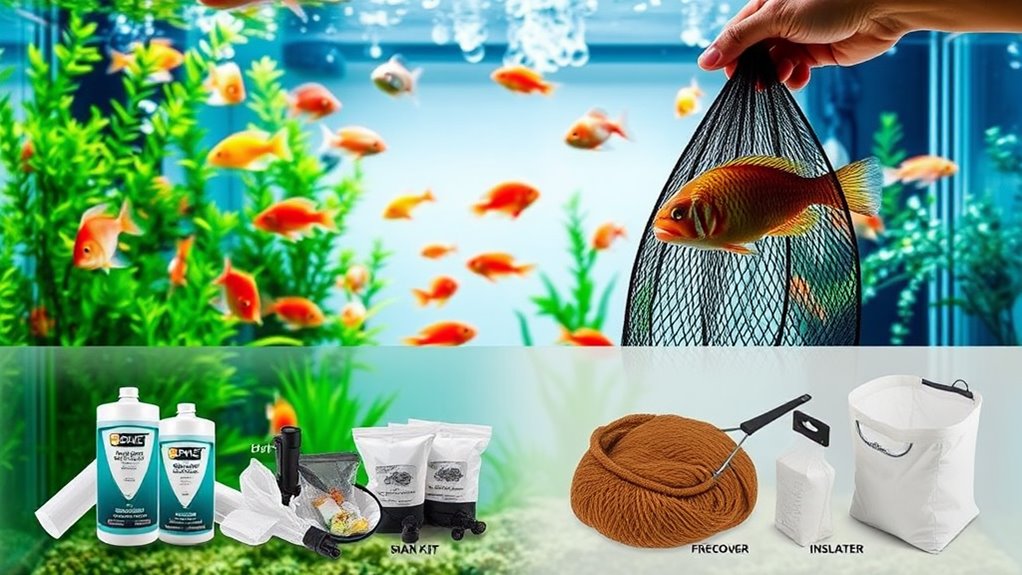
To prevent fish stress when moving or relocating your tank, focus on maintaining a stable environment. Test and prepare water conditions to match your fish's needs, including pH and temperature. Use sturdy, clean containers filled with tank water, and separate fish if necessary to reduce stress. During transport, minimize sudden movements and keep transport times short. Once at your new location, float fish bags for 15–30 minutes to acclimate them gradually. After relocation, monitor their behavior closely and verify stable water conditions. There's plenty more to improve your fish's well-being during a move, so keep exploring for additional tips.
Assessing Your Fish's Needs
To effectively prevent stress in your fish, you need to first assess their specific needs. Comprehending fish behavior and habitat preferences is vital in creating a supportive environment. Start by researching the species you own; each type of fish has unique requirements that influence their well-being.
Observe how your fish interact with their surroundings. Are they swimming actively, or do they seem to hide often? Active swimming usually indicates a happy fish, whereas excessive hiding can signal stress. Take note of their social behavior too—some fish thrive in groups, while others prefer solitude. Knowing this helps you create a harmonious community in your tank.
Next, consider their habitat preferences. Are they natural swimmers, or do they enjoy rooted plants and caves to explore? Some species need open space to dart around, while others benefit from structures that offer security. Tailoring the tank setup to match these preferences is fundamental for their happiness.
You should additionally pay attention to water conditions, as this greatly impacts fish health. Each species has specific temperature, pH, and hardness requirements. Regularly testing these parameters guarantees a stable environment that aligns with their needs.
Finally, don't overlook the importance of diet. Providing a balanced diet rich in nutrients will keep your fish healthy and reduce stress. By taking the time to assess and cater to your fish's needs, you'll cultivate a thriving aquatic community that flourishes without stress.
Preparing the Tank for Move
Before you move your fish, it's essential to clean the tank thoroughly to eliminate any harmful substances. You'll likewise want to maintain stable water conditions to guarantee your fish don't experience additional stress. Finally, organizing your equipment and supplies will make the process smoother and more efficient.
Clean the Tank Thoroughly
Cleaning the tank thoroughly is crucial for guaranteeing your fish remain healthy and stress-free during a move. Not just does this help eliminate harmful bacteria, but it prepares a fresh environment for your aquatic friends as well. To make your cleaning process effective, consider these tank cleaning techniques and effective cleaning products:
| Cleaning Technique | Recommended Products | Purpose |
|---|---|---|
| Gravel Vacuuming | Gravel vacuum | Removes debris and waste |
| Glass Scrubbing | Algae scraper | Clears algae buildup |
| Water Change | Dechlorinated water | Refreshes water quality |
Start by removing your fish and placing them in a temporary holding container with some of their original tank water. Next, use a gravel vacuum to clean the substrate, and don't forget to scrub the glass with an algae scraper to guarantee visibility. Finally, perform a water change with dechlorinated water to improve the tank's conditions.
Maintain Stable Water Conditions
After you've cleaned the tank thoroughly, maintaining stable water conditions is vital to minimizing stress for your fish during the move. Fish thrive in environments where water chemistry remains consistent. Here are three fundamental factors to focus on:
- Water Temperature: Make certain the water temperature remains stable throughout the move. Sudden changes can shock your fish, so use heaters or chillers as necessary.
- pH Stability: Monitor and maintain pH levels to avoid stress. Test the water before the move and adjust as needed to keep conditions similar to what your fish are used to.
- Oxygen Levels & Filtration Efficiency: Keep oxygen levels high by using efficient filtration. Proper filtration not just maintains oxygen levels but likewise controls ammonia and nitrate, promoting substrate health.
During the move, pay close attention to lighting conditions and avoid exposing your fish to bright lights. Proper tank cycling is significant, too, as it guarantees your fish have a stable home when you arrive at your new location. By focusing on these aspects, you'll be helping your fish adjust more comfortably to their new environment.
Organize Equipment and Supplies
Packing up your aquarium equipment and supplies efficiently can make a big difference in reducing stress for your fish during the move. To start, create an equipment checklist that includes everything you'll need for both the disassembly and reassembly of your tank. This will guarantee you don't forget any essential items, which can lead to panic and confusion on moving day.
Next, focus on supply organization. Gather all your supplies, such as fish bags, water conditioners, and nets, and place them in a designated container. This way, you can easily access what you need without rummaging through boxes. Label each container clearly to streamline the process further.
When you're ready to pack your tank, keep your equipment in separate, cushioned boxes to prevent any damage. Store your fish in secure, appropriately sized bags filled with water from their current tank. Remember to minimize the time they spend in transit to safeguard their well-being.
Choosing the Right Containers
When you're choosing containers for your fish, size and volume matter a lot. Make sure the materials are safe and durable to protect your aquatic friends from stress. Selecting the right containers can make all the difference in keeping your fish healthy and happy during a move.
Size and Volume Considerations
Choosing the right container for your fish tank is vital to preventing stress and guaranteeing a healthy environment for your aquatic pets. When you're relocating your tank, consider the tank dimensions and water volume of your current setup. In this manner, you'll make certain your fish adapt smoothly to their new home.
Here are three key factors to keep in mind when selecting containers:
- Size Matters: Choose a container that mirrors the tank dimensions of your current setup. It'll help maintain a stable environment, preventing sudden temperature and water quality changes.
- Volume Capacity: Confirm the container can hold enough water volume to accommodate your fish comfortably. Overcrowding can lead to stress and aggression among your aquatic friends.
- Temporary Housing: If you need a temporary solution, opt for a container that's easy to transport and clean. This will minimize disruption for your fish during your move.
Material Safety and Durability
Ensuring material safety and durability in your fish containers is vital for your pets' well-being. When choosing the right containers for your fish, you'll want to prioritize tank materials that meet safety standards and offer non-toxic choices. Look for durable options that boast impact resistance to avoid accidental breakage during your move.
Consider the following table to guide your selection:
| Material | Pros |
|---|---|
| Glass | High impact resistance, clear view |
| Plastic | Lightweight, cost-effective |
| Acrylic | Shatter-resistant, easy to clean |
| Metal | Durable, but may rust if not treated |
Leak prevention is imperative, so always check for seals and joints. Maintenance requirements vary by material; for instance, glass might need more careful handling, whereas plastic is easier to manage. Be mindful of cost considerations, too. Sometimes, investing a little more upfront in durable options can save you stress and money in the long run. By selecting the right containers, you'll create a safer environment for your fish, helping them thrive during and after the move.
Maintaining Water Quality
Water quality is vital for preventing stress in fish. When relocating your tank, maintaining ideal water conditions is fundamental for your fish's health and well-being. Here are three key areas to focus on:
- pH Balance and Temperature Stability: Verify the pH level is stable and suitable for your fish species. Sudden changes can lead to stress. Moreover, keep the temperature consistent to avoid shocking your fish.
- Ammonia Levels and Nitrate Control: Regularly test your water for ammonia and nitrate levels. High ammonia can be toxic, while increased nitrates can cause stress. Implement efficient filtration systems and change the water frequently to keep these levels in check.
- Oxygenation Techniques and Water Hardness: Guarantee proper oxygenation by using air stones or surface agitation. Furthermore, monitor the water hardness, as different fish have varying tolerance levels. Adjustments can be made using chemical treatments or substrate management.
Transporting Fish Safely
Maintaining ideal water quality sets the foundation for a successful fish transport. Before you start the fish transportation process, confirm the water conditions in the transport containers closely match those in your aquarium. This means keeping the temperature, pH, and ammonia levels similar to what your fish are accustomed to.
You'll need a clean, sturdy container with a secure lid. Fill it with water from your tank, making sure to leave enough space for air at the top. Ideally, use bags designed specifically for fish transportation; these are often thicker and more durable. If you're transporting multiple fish, it's best to separate them to minimize stress and prevent any potential fighting.
During the trip, try to keep the containers stable and avoid sudden movements. If you're traveling a long distance, consider adding an oxygen source or an air pump to keep the water well-aerated. This will help with stress reduction for your fish.
If you're moving them in bags, confirm the bags are inflated with oxygen and not just filled with water. This extra oxygen will help your fish breathe better during transport. Moreover, limit the duration of transport where possible; the shorter the time spent in transit, the less stress your fish will endure.
Setting Up the New Tank
Before you introduce your fish to their new home, it's crucial to set up the tank properly. A well-organized tank layout not just improves the aesthetic appeal but also provides a comfortable environment for your aquatic friends. Here's how to create the perfect setup:
- Choose the Right Location: Select a stable, quiet area away from direct sunlight and drafts. This helps maintain a consistent temperature and reduces stress for your fish.
- Plan Your Tank Layout: Think about how you'll arrange the substrate, plants, and decorations. Confirm there are hiding spots and open swimming areas. A balanced tank layout encourages natural behaviors and allows fish to feel secure.
- Select Decoration Choices Wisely: Use non-toxic materials and avoid anything sharp that could harm your fish. Incorporate rocks, driftwood, and plants that mimic their natural habitat. This not just beautifies the tank but also gives your fish a sense of security.
Once you've got your tank layout and decoration choices in place, fill the tank with water, treat it with dechlorinator, and cycle it appropriately before adding your fish. This preparation is crucial for reducing stress in your aquatic companions. A little effort in setting up the new tank goes a long way in confirming your fish thrive and adapt to their new environment. Remember, happy fish make for a happy tank!
Acclimating Fish to New Environment
Acclimating your fish to their new environment is an important step in guaranteeing their health and happiness. Start with temperature acclimation; gradually introduce your fish to the new tank's temperature by floating their bag in the water for about 15-30 minutes. This slow change helps prevent shock. After that, consider salinity adjustment if you're moving between freshwater and saltwater setups.
Next, observe any behavioral changes in your fish. They might exhibit stress indicators like rapid gill movement or hiding more than usual. Monitor oxygen levels, as a newly set-up tank may not have established sufficient oxygenation right away.
Once the fish are in their new home, allow them to settle in before returning to their regular feeding routines. Introduce food gradually to avoid overfeeding, which can disrupt the tank's balance. Pay attention to their interactions with tank mates; ascertain compatibility to promote a harmonious environment.
Environmental enrichment plays an important role in reducing stress. Add hiding spots, plants, or decorations that mimic their natural habitat, and be mindful of the lighting conditions. Sudden changes in brightness can startle your fish, so gradually adjust lighting to help them adapt.
Lastly, monitor the pH balance of your new tank. Keeping it stable is significant for your fish's well-being. A consistent pH level will support their health and minimize stress during this adjustment phase. By following these steps, you're creating a safer, happier environment for your aquatic friends.
Monitoring Fish After Relocation
Regularly monitoring your fish after relocation is vital for guaranteeing their well-being and adapting to their new environment. This process involves sharp observation and attention to any changes in their behavior. As you observe, look for stress indicators that may signal discomfort or health concerns.
Here are three primary aspects to focus on during your post-relocation monitoring:
- Behavioral Changes: Watch for unusual fish behavior, such as lethargy, hiding, or aggressive interactions with tank mates. These changes can indicate stress and may require your intervention.
- Feeding Adjustments: After relocation, your fish may need time to adapt their feeding habits. Offer smaller portions and monitor their response. If they don't eat, it might be a sign of stress or health issues that need addressing.
- Health Assessment: Keep an eye on your fish's physical condition. Look for signs of illness, such as discoloration, lesions, or abnormal swimming patterns. Regular health assessments can help identify problems early.
Environmental stability is vital during this recovery time. Verify the water parameters are consistent and suitable for your fish species. Utilize observation techniques like maintaining a daily log to track behavioral changes and feeding patterns. This can improve your comprehension of their adjustment process and help you provide the best care possible. By staying attentive and proactive, you can support your fish as they navigate their new home.
Frequently Asked Questions
How Can I Tell if My Fish Are Stressed?
You'll know your fish are stressed when they act like they've auditioned for a horror movie! Watch for behavioral changes like hiding more than usual or darting around the tank. You might likewise spot physical symptoms, like clamped fins or faded colors. If they're gasping at the surface, it's like they're waving a red flag! Keeping a close eye on these signs will help you make certain your aquatic friends are happy and healthy.
What Types of Fish Are Most Sensitive to Relocation?
When considering which fish are most sensitive to relocation, you'll find that species like Betta fish, Tetras, and certain types of Cichlids often experience a significant relocation impact. These sensitive species can struggle with changes in water conditions and stress from being moved. If you're caring for these fish, it's essential to monitor their behavior closely during any change to guarantee they adjust well and maintain their health throughout the process.
Can I Use Tap Water for the New Tank?
You can use tap water for your new tank, but it requires proper treatment first. Before adding it to your aquarium, make certain you're using a reliable tap water treatment to remove chlorine and other harmful chemicals. Water conditioning is crucial to create a safe environment for your fish. Taking these steps guarantees that your aquatic friends thrive in their new home, showing your dedication to their well-being.
Should I Feed My Fish During the Move?
You might wonder if you should feed your fish during the move. It's best to stick to their regular feeding schedule but avoid overfeeding. Fish can show stress signs when relocated, so keeping their routine helps maintain stability. If you're moving for several hours, you can skip a meal to minimize waste in the water. Focus on creating a calm environment; your fish will appreciate your thoughtful care during this change.
How Long Can Fish Survive in Transport Containers?
You might be surprised to know that fish can survive quite a bit in transport containers. Under ideal transport conditions, small fish can last up to 48 hours, whereas larger species may manage around 24 hours. The container size matters too; a larger container allows for more oxygen and reduces stress. Always verify the water is clean and the temperature is stable, so your fish arrive safe and sound, ready to thrive in their new home.


