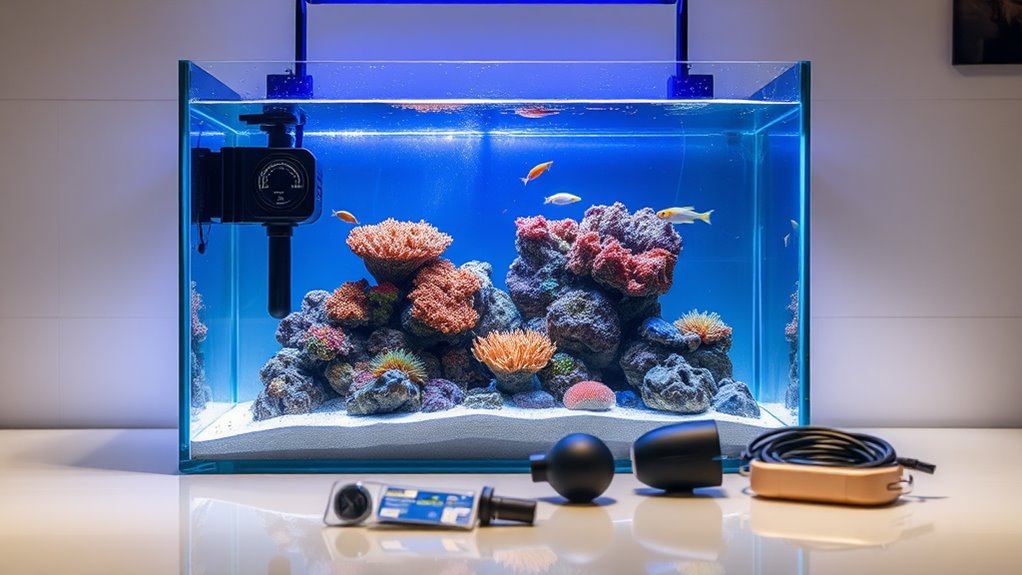
A quarantine tank is vital for protecting your marine livestock from diseases that can sneak in with new fish or invertebrates. It gives you a safe space to acclimate your newcomers, monitor their health, and manage any parasites before they join your main tank. Make certain you choose the right size and equipped with reliable filtration, heaters, and proper decorations. You'll need to maintain water quality, observe behaviors regularly, and follow strict biosecurity measures. Avoid common mistakes to guarantee a successful quarantine experience. Stick around, and you'll find more important tips on maintaining a thriving marine ecosystem.
Importance of Quarantine Tanks
In relation to maintaining a healthy marine ecosystem, the significance of quarantine tanks can't be overstated. These tanks offer numerous quarantine benefits that contribute markedly to your marine livestock's overall health. By implementing disease prevention strategies, you can protect your established aquarium from potential outbreaks caused by new fish. A quarantine tank allows you to monitor for any signs of illness before introducing new livestock into your main system.
Stress reduction is another important aspect of using quarantine tanks. Moving fish can be stressful, and a designated space for fish acclimation helps them adjust to their new environment. This adjustment period is critical for their well-being and longevity. You'll as well have the opportunity for parasite management, as you can treat any infestations without risking the health of your main tank.
Behavioral observation in quarantine tanks likewise plays a key role in ensuring livestock health. By closely monitoring your new arrivals, you can evaluate their behavior and overall condition, allowing you to catch any issues early. Plus, these tanks are fundamental for implementing biosecurity measures that safeguard your entire ecosystem.
Choosing the Right Size
When selecting the right size for your quarantine tank, contemplate the number and type of marine livestock you plan to introduce. Proper tank dimensions are vital to ensuring your fish have enough space to thrive while concurrently allowing you to monitor their health effectively. A tank that's too small can lead to stress and behavior issues, while one that's too large may complicate water quality management.
To help you choose, here's a simple guide to tank sizes based on species compatibility and numbers:
| Livestock Type | Recommended Tank Size |
|---|---|
| Small Fish (e.g., Clownfish) | 10-20 gallons |
| Medium Fish (e.g., Tangs) | 20-40 gallons |
| Larger Fish (e.g., Angels) | 40+ gallons |
| Invertebrates (e.g., Shrimp) | 5-10 gallons |
Make sure to reflect on how many fish you'll be housing together. Species compatibility is fundamental; some fish need more space to establish territory. Moreover, think about the potential for future additions to your aquarium. Choosing a slightly larger tank now can save you time and effort down the line.
Ultimately, the right tank size protects not just your marine livestock but contributes to a healthier reef ecosystem. By giving them the right environment from the start, you'll be serving both your aquatic friends and the hobby you love.
Essential Equipment Needed
Selecting the right tank size is just the beginning; you'll also need the right equipment to create a stable environment for your marine livestock. First, consider filter types that suit your tank volume and the species you're housing. A good filter will keep the water clean and reduce stress on your fish.
Next, heater options are critical for maintaining a consistent temperature. Most marine species thrive in warmer waters, so investing in a reliable heater is a must. You'll also want to think about lighting needs; LED lights can simulate natural conditions and promote healthy coral growth if you have invertebrates.
Oxygenation methods play an important role in keeping your livestock healthy. Air pumps and diffusers can help maintain oxygen levels, especially in smaller tanks. Furthermore, substrate choices should be made carefully, as they can influence water quality and provide a habitat for beneficial bacteria.
Water conditioners are necessary for preparing tap water, ensuring it's safe for your marine life. Regular use can neutralize harmful chemicals, enhancing the wellbeing of your livestock. Finally, don't forget about maintenance schedules. Establishing a routine for water changes and equipment checks will keep your quarantine tank in ideal condition.
Setting Up the Tank
Creating a stable environment for your marine livestock starts with properly setting up the tank. This vital step guarantees the health and well-being of your fish, helping you serve them better. Begin by selecting the right size tank; it should be spacious enough to accommodate your chosen species as you consider their fish compatibility.
Next, focus on the important tank decoration. You can choose from natural rocks, coral structures, or artificial plants that provide hiding spots and reduce stress. These elements not only improve aesthetics but also contribute to a more comfortable living environment for your marine life.
Here's a quick checklist for setting up your quarantine tank:
- Filtration system: Confirm you have a reliable filter to maintain water quality.
- Heating equipment: Install a heater to keep the temperature consistent with your fish's needs.
- Water conditioner: Use a quality water conditioner to eliminate harmful chemicals and prepare your water for your livestock.
After setting up these components, fill the tank with saltwater and allow it to cycle for a few days. Monitor the parameters closely, such as pH, ammonia, and nitrate levels, to establish a suitable habitat. Once you've confirmed the water is stable, you can introduce your marine livestock. Remember, the key to a successful quarantine tank is creating an environment where your fish can thrive, guaranteeing they remain healthy and ready for their permanent home.
Quarantine Procedures Explained
After your quarantine tank is set up and stable, it's time to implement effective quarantine procedures to guarantee the health of your marine livestock. Start by introducing any new arrivals slowly. This means placing them in the quarantine tank without overcrowding, allowing them to acclimate to their new environment. Remember, patience is key.
Next, establish quarantine protocols that include a minimum observation period of 2-4 weeks. During this time, monitor your new marine life closely for any signs of illness, like unusual behavior or physical symptoms. If you notice anything concerning, document it for better disease management.
Feeding should be regular but careful; overfeeding can lead to water quality issues. Use high-quality foods and verify that your livestock are eating well. If you see any fish not feeding, it might be a sign of stress or illness.
Maintain strict biosecurity measures. Always use dedicated tools, like nets and siphons, for your quarantine tank. This helps prevent cross-contamination with your main display tank. If you need to treat any livestock for diseases, follow recommended treatments closely and be certain to remove activated carbon and any filtration that might interfere with medication.
Finally, when the observation period is over and your livestock shows no signs of illness, you can safely introduce them into your main tank. By following these quarantine procedures, you're not just protecting your livestock; you're guaranteeing a healthier, thriving marine environment for everyone.
Monitoring Water Quality
Monitoring water quality is essential for the health of your marine livestock. You need to regularly test key parameters like pH, salinity, and ammonia levels to guarantee a stable environment. By keeping a close eye on these factors, you can prevent stress and disease in your quarantine tank.
Importance of Regular Testing
Regular testing of water quality is fundamental for maintaining a healthy environment in your quarantine tank. By keeping a close eye on water chemistry, you can guarantee your fish thrive during their stay. Regular testing helps you detect issues early, which is critical for fish health and their overall well-being.
Here are three key aspects to monitor:
- pH Levels: Maintaining the right pH balance is significant for fish health.
- Ammonia and Nitrite Levels: These toxins can harm your fish if left unchecked.
- Salinity: The right salinity level is necessary for the well-being of marine species.
Key Water Parameters
To guarantee a thriving environment for your marine livestock, it's critical to keep an eye on several key water parameters. Start with ammonia levels, as high concentrations can be toxic. Regularly test these levels to confirm they remain at zero. Nitrate control is likewise fundamental; aim to keep nitrates low to promote a healthy ecosystem.
Next, focus on salinity balance. Maintaining the correct salinity is essential for the well-being of your fish and invertebrates. pH stability is another important factor; aim for a stable pH level that matches your livestock's needs.
Temperature regulation plays a significant role, as well. Sudden temperature fluctuations can stress your marine animals, so invest in a reliable heater or chiller. Don't forget about oxygen levels; confirm adequate aeration to keep your fish happy and healthy.
Lastly, implement regular water changes and proper tank cycling to maintain overall water quality. This helps to prevent the buildup of harmful substances and keeps your quarantine tank a safe haven for your marine livestock. By monitoring these parameters diligently, you'll create an inviting environment that supports their health and well-being.
Recognizing Signs of Illness
Often, fish show subtle signs of illness before their condition deteriorates, making it vital to stay vigilant. By focusing on symptom identification, you can better support your marine livestock's health. Watch for behavioral changes that may indicate stress or illness, such as increased hiding or erratic swimming patterns.
Pay close attention to the following signs:
- Skin lesions: Look for any unusual spots or sores on your fish, which could signal bacterial or parasitic infections.
- Respiratory issues: If your fish are gasping at the water's surface or breathing swiftly, this could indicate oxygen deprivation or gill problems.
- Feeding habits: A sudden loss of appetite or refusal to eat can be a red flag, suggesting something may be wrong.
Color fading is another important indicator. When your fish lose their lively hues, it can be a sign of stress or illness. Moreover, monitor for any stress indicators, such as excessive fin clamping or abnormal swimming behavior. Keeping an eye out for parasite detection is vital, as these invaders can severely impact your livestock's health.
Duration of Quarantine Period
When it pertains to the duration of your quarantine period, several factors come into play. You'll want to take into account the specific needs of your marine livestock and any signs of illness that may affect their health. Typically, a recommended quarantine duration ranges from two to four weeks, but adjusting this based on individual circumstances is essential.
Recommended Quarantine Duration
In the sphere of marine livestock management, determining the recommended quarantine duration is crucial for ensuring the health of your tank. The ideal duration typically ranges from two to four weeks, depending on various factors, including the species and the potential diseases they may carry. This timeframe allows you to observe your new additions thoroughly and reap the quarantine benefits.
Here are some key considerations for your quarantine period:
- Observation: Keep an eye out for any signs of illness or stress in your new fish.
- Treatment: If any issues arise, this duration gives you ample time to implement necessary treatments.
- Adaptation: It helps your fish acclimate to your tank's conditions without the pressure of competition.
Factors Affecting Duration
What factors should you consider when determining the duration of a quarantine period for your marine livestock? First, assess the health of your new arrivals. If they show signs of disease or stress, extend the quarantine. Quarantine stress can impact livestock behavior, making them more susceptible to illness. You'll additionally want to evaluate tank compatibility; if your livestock are aggressive or territorial, longer quarantine periods may be necessary to monitor interactions.
Environmental stability plays a crucial role too. Maintain consistent water parameters to help fish acclimate effectively, using acclimation techniques that suit their needs. The longer you keep them in a stable environment, the better their chances of developing pathogen resistance.
Consider the potential for disease transmission as well. Implementing strong biosecurity measures can help minimize risks, but it's wise to err on the side of caution. A good rule of thumb is to quarantine for at least two to four weeks, but you might need to adjust based on the factors mentioned. In the end, your goal is to guarantee the health of your livestock and the overall stability of your aquarium.
Integrating Livestock Into Main Tank
How can you guarantee a smooth changeover for your new marine livestock into the main tank? The key lies in careful planning and consideration of both behavioral acclimatization and tank compatibility. By following a few simple steps, you can help your new inhabitants adjust seamlessly to their new environment and guarantee their well-being.
- Observe your current livestock: Before introducing new additions, take note of the behaviors and dynamics of your existing fish. This will help you assess compatibility.
- Use a drip acclimation method: Slowly acclimate your new livestock to the main tank's water parameters. This gradual process reduces stress and promotes healthier adaptation.
- Monitor interactions closely: After introducing new fish, watch them for signs of stress or aggression. Early intervention can prevent issues from escalating.
Common Mistakes to Avoid
One of the biggest pitfalls in managing a marine aquarium involves the rush to introduce new livestock without proper preparation. This enthusiasm often stems from quarantine myths that suggest a quick transfer from the store to your main tank is harmless. In reality, this can lead to significant setbacks for both you and your aquatic friends.
Many aquarists fall prey to common misconceptions, believing that all fish and invertebrates are healthy right out of the bag. Nevertheless, unseen parasites and diseases can lurk, ready to wreak havoc on your established ecosystem. Always keep in mind that a proper quarantine period can save you from heartache down the line.
Another mistake is neglecting the quarantine tank itself. It's not just a storage unit; it requires proper filtration, water parameters, and a stable environment. Failing to maintain these conditions can stress your new livestock and lead to health issues, undermining your efforts to protect them.
Lastly, don't underestimate the importance of observation. It's easy to overlook symptoms of illness, especially if you're excited about your new additions. Regularly monitor their behavior and health during the quarantine phase.
Maintenance Tips for Quarantine Tanks
To keep your quarantine tank healthy, you need to regularly test the water parameters. This guarantees your marine livestock stays in ideal conditions during their isolation period. Furthermore, don't forget to sterilize your equipment to prevent the spread of any potential diseases.
Regular Water Testing
Maintaining a quarantine tank isn't just about isolating new marine livestock; regular water testing is crucial for ensuring a stable and healthy environment. By monitoring the water quality, you can catch potential issues before they affect your new arrivals.
Here are some key aspects to focus on during your water testing routine:
- Water Testing Methods: Use reliable kits or professional lab services to check for ammonia, nitrites, nitrates, and pH levels.
- Testing Frequency: Test the water at least once a week, or more often if you're noticing any signs of distress in your livestock.
- Record Keeping: Maintain a log of your water parameters to identify trends over time and make informed adjustments.
Equipment Sterilization Practices
Proper sterilization of equipment is vital for preventing the introduction of diseases into your quarantine tank. By adopting effective sterilization methods, you can guarantee the health and wellbeing of your marine livestock. Here are some important equipment types you should focus on, along with recommended sterilization techniques:
| Equipment Type | Recommended Sterilization Method |
|---|---|
| Nets | Soak in a bleach solution (1:10) for 10 minutes, rinse thoroughly |
| Buckets | Boil for 10 minutes or soak in vinegar for 30 minutes |
| Siphons | Rinse with hot water and disinfect with hydrogen peroxide |
| Glassware | Use a 70% isopropyl alcohol wipe or soak in bleach solution |
Regularly practicing these sterilization methods will help you maintain a safe environment for your marine livestock. Always verify you rinse equipment thoroughly after sterilization to remove any harmful residues. By doing this, you serve your aquatic community effectively, safeguarding their health and enhancing your overall success in marine husbandry. Remember, a well-maintained quarantine tank can make all the difference in the life of your marine species.
Frequently Asked Questions
Can I Use a Quarantine Tank for Freshwater Fish Too?
Did you know that nearly 60% of fish diseases can be traced back to newly introduced fish? You can absolutely use a quarantine tank for freshwater fish. A freshwater quarantine helps monitor new arrivals, ensuring they're healthy before adding them to your main tank. By doing this, you're protecting the overall fish health of your aquarium. It's a responsible choice that benefits both your fish and the aquatic ecosystem you care for.
How Often Should I Change Water in the Quarantine Tank?
You should change the water in your quarantine tank regularly to maintain a healthy environment for your fish. A good water change frequency is about 10-20% weekly, but you might need to adjust based on your tank's bioload. Consistent quarantine tank maintenance guarantees that toxins don't build up, promoting your fish's well-being. Remember, clean water is vital for their recovery and health, so stay proactive in managing their environment!
What Should I Do if My Quarantine Tank Develops Algae?
"An ounce of prevention is worth a pound of cure." If your quarantine tank develops algae, act quickly to maintain a healthy environment. Start with algae control methods like reducing light exposure and increasing water flow. Regular tank maintenance is key; perform water changes and clean surfaces to keep algae at bay. Consider adding algae-eating creatures, but verify they're compatible with your livestock. Staying proactive will help you keep the tank thriving for everyone involved.
Is It Necessary to Cycle a Quarantine Tank Before Use?
Is it necessary to cycle a quarantine tank before use? Yes, it's essential for tank stability. When you cycle your tank, you establish beneficial bacteria that break down harmful waste products. This cycling process helps create a healthier environment for your marine life, reducing stress and promoting better overall health. By ensuring your quarantine tank is properly cycled, you're taking an important step to serve your aquatic friends well during their change.
Can I Add Multiple Species to One Quarantine Tank?
Envision trying to host a dinner party with guests who can't stand each other—chaos ensues! Regarding adding multiple species to one quarantine tank, you've gotta consider fish compatibility. The tank size matters too; a cramped environment raises stress levels and conflict. Ideally, quarantine tanks should house one species to guarantee a smooth changeover and monitor health effectively. Prioritize each fish's well-being for a harmonious start to their new home.


