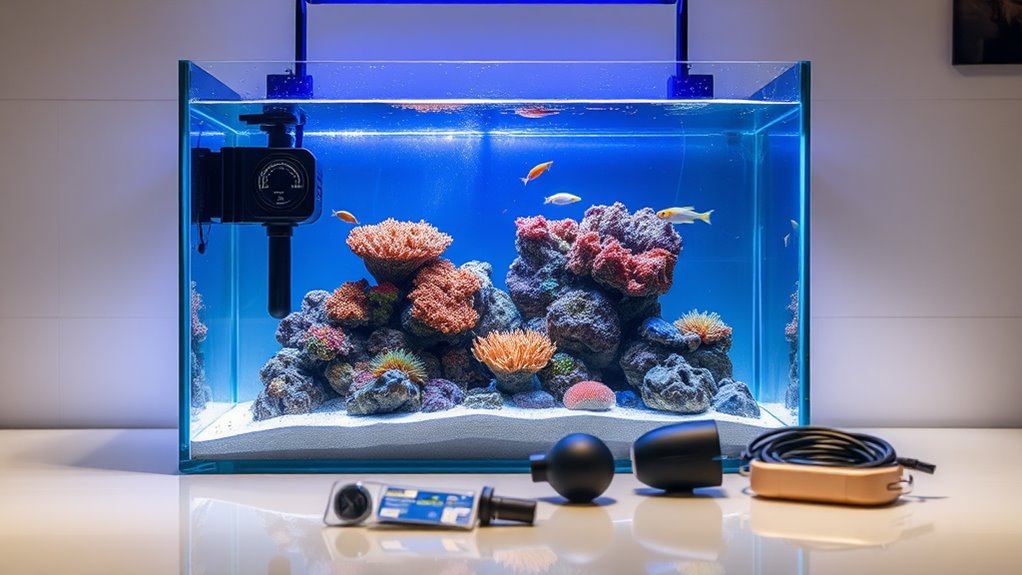
To plan and set up a marine biotope aquarium, start by comprehending the specific ecosystem you want to replicate. Choose an appropriately sized tank, considering available space and budget. Select compatible species that thrive in similar conditions, and prepare your aquarium with natural decorations like rocks and marine plants. Use suitable substrate, like sand or crushed coral, to mimic natural environments. Install effective filtration and lighting systems, and maintain water quality by regularly testing salinity and other parameters. Pay attention to cycling your tank for ideal conditions. Discovering specifics will improve your setup and guarantee success!
Understanding Marine Biotopes
Grasping marine biotopes is fundamental for creating a thriving aquarium that mimics a specific ocean environment. You'll want to explore the unique ecosystem dynamics that define these biotopes. Each marine environment is a complex network where species interactions play a significant role. Comprehending these relationships will help you create a balanced habitat that supports both flora and fauna.
Begin by reflecting on the specific biotope you want to replicate. Whether it's a lively coral reef or a serene mangrove, each area has its own set of species that coexist harmoniously. Recognizing how these species interact—through competition, predation, or symbiosis—will guide you in selecting the right inhabitants for your aquarium.
For instance, if you're setting up a reef biotope, you'll need to think about how coral species provide shelter for various fish and invertebrates while concurrently competing for light and nutrients. Grasping these dynamics helps guarantee that the species you choose can thrive together, avoiding potential conflicts that could harm your aquarium's health.
Moreover, paying attention to the physical conditions of the biotope, such as water temperature, salinity, and substrate type, is crucial. These factors influence the ecosystem dynamics and support the intricate web of life within your aquarium.
Selecting the Right Aquarium
When you're choosing an aquarium for your marine biotope, size matters. You'll additionally want to think about the materials and design that best suit your setup, along with the filtration and lighting needs for the specific species you plan to keep. Let's explore these key considerations to guarantee your aquarium thrives.
Aquarium Size Considerations
Choosing the right aquarium size is vital for the success of your marine biotope. The tank dimensions you select will greatly impact the health and well-being of the aquatic life you intend to keep. Consider the types of species you want to house, as some require more space to thrive than others. A larger aquarium typically offers a more stable environment, which is imperative for maintaining water quality.
When determining the ideal water volume, think about the specific needs of the organisms you plan to incorporate. Some species flourish in larger volumes of water, allowing for better filtration and less fluctuation in parameters. Moreover, larger tanks can accommodate more diverse ecosystems, enabling you to create a more authentic biotope.
Before making your decision, assess your available space and budget. A larger tank may need more equipment and resources, so verify you're prepared for the commitment. Remember, selecting the right aquarium size sets the foundation for a thriving marine environment, allowing you to serve both the organisms and your community effectively. With careful planning, you'll create a beautiful underwater sanctuary that benefits everyone involved.
Material and Design Choices
Selecting the right material and design for your marine biotope aquarium is vital for both aesthetics and functionality. Start by considering the tank's shape and size, which should complement your intended rock formations and plant selection. A well-designed aquarium not only improves tank aesthetics but also promotes a healthy habitat simulation for your marine life.
When planning the equipment layout, make sure it's efficient and unobtrusive, allowing for easy maintenance. Think about coral placement, as it should mimic natural environments, providing shelter and open space for fish to thrive. Utilize aquascaping techniques like layering rocks and creating hiding spots to encourage a dynamic ecosystem.
Water chemistry is critical, so choose materials that won't leach harmful substances into your aquarium. Opt for natural rocks and substrates that support the specific conditions required for your chosen species. Select plants that complement your marine setting, making sure they can thrive alongside your corals and fish.
Filtration and Lighting Needs
Ensuring ideal filtration and lighting is fundamental for a thriving marine biotope aquarium. A well-functioning filtration system not just keeps your water clear but additionally maintains a healthy environment for the inhabitants. One key component is a protein skimmer; its significance can't be overstated. It helps remove organic waste before it breaks down, preventing harmful toxins from building up. This is critical for any marine ecosystem you aim to replicate.
When it comes to lighting, consider the specific needs of the aquatic life you're supporting. Different organisms thrive under varying lighting spectra, so it's important to choose lights that mimic natural sunlight. Look for full-spectrum LED lights that can adjust to different wavelengths, promoting healthy growth for corals and plants alike.
Don't forget to research the specific needs of your selected biotope; each environment has unique requirements. By investing time in selecting the right filtration and lighting systems, you're not merely creating an aquarium—you're cultivating a dynamic community that reflects nature's beauty. Your efforts will surely lead to a rewarding experience for both you and your aquatic friends.
Choosing Compatible Species
When setting up your marine biotope aquarium, it's vital to pick species that thrive in the same environment. Comprehending species compatibility is fundamental for maintaining ecological balance, ensuring a harmonious habitat for your aquatic friends. When choosing your species, consider their natural habitats, behaviors, and dietary needs. This knowledge will help you create a dynamic ecosystem that supports all inhabitants.
Here's a quick reference table to guide you in selecting compatible species:
| Species | Habitat Type | Compatibility |
|---|---|---|
| Clownfish | Coral reefs | High |
| Anemone | Coral reefs | High (with clownfish) |
| Surgeonfish | Coral reefs | Moderate |
Aim to include a mix of different species, but be cautious about overstocking. Each fish or invertebrate adds to the tank's bioload, potentially disrupting the ecological balance if not managed properly. It's also wise to research any potential aggression between species. For example, although clownfish are typically peaceful, they can be territorial, especially when breeding.
As you curate your marine biotope, keep in mind that the goal is to replicate a natural ecosystem. This not only improves the beauty of your aquarium but also promotes healthier, happier fish. By carefully selecting compatible species, you're investing in a thriving underwater community that benefits both you and your aquatic companions.
Preparing the Aquarium Setup
Preparing your aquarium setup involves creating an environment that closely mimics the natural habitat of your chosen marine species. You want to guarantee that every element in the aquarium works together harmoniously, promoting the health and well-being of your aquatic life. Start by gathering the vital aquarium equipment that suits the specific needs of your marine biotope.
Here's a quick checklist to guide you:
- Filtration System: Choose one that maintains water quality by removing toxins and debris.
- Lighting: Select appropriate lighting to support the growth of marine plants and replicate natural sunlight.
- Heating: Confirm your heater maintains a stable temperature suited for your selected species.
Next, incorporate marine plants into your setup. These plants not merely improve the aesthetic appeal but additionally provide shelter and breeding grounds for your fish. When choosing marine plants, consider species that coexist naturally with your chosen fish.
After assembling your equipment and plants, carefully plan the layout of your aquarium. Think about the placement of plants and hiding spots, taking into account the swimming patterns of your marine life. By focusing on these details, you're not just creating a visually pleasing environment; you're also cultivating a thriving ecosystem. Remember, a well-prepared aquarium setup is vital for the success of your marine biotope, allowing you to serve both the beauty of nature and the needs of your aquatic companions effectively.
Selecting Substrate and Decor
Choosing the right substrate and decor is crucial for your marine biotope aquarium. The substrate you select will not just impact the aesthetic appeal but additionally the health of your aquatic life. Common substrate types include sand, crushed coral, and gravel. Sand is often the best choice for a natural look, especially in a reef setting, as it mimics ocean floor environments. Crushed coral can raise pH levels, making it suitable for certain species, whereas gravel provides a versatile option that's easy to clean.
When it comes to decor options, consider natural elements that reflect the specific biotope you're trying to replicate. Live rock is a fantastic choice; it offers shelter for fish and invertebrates while promoting beneficial bacteria for a healthy ecosystem. You might as well want to use driftwood or coral structures to create hiding spots and swimming areas.
Incorporating plants is another great way to improve your aquarium's environment. Choose marine plants like seagrasses or macroalgae that can contribute to a balanced ecosystem while providing food and shelter for your marine life.
Cycling the Aquarium
After setting up your substrate and decor, the next step involves cycling the aquarium to establish a healthy environment for your marine life. This process is critical for developing the nitrogen cycle, which converts harmful ammonia into less toxic substances. You'll want to focus on cultivating beneficial bacteria that will help keep your water parameters stable.
To cycle your aquarium effectively, consider the following:
- Testing Kits: Regularly check ammonia levels and other key parameters.
- Patience: Cycling duration can vary, often taking several weeks depending on your methods.
- Aeration: Guarantee adequate oxygen levels to support beneficial bacteria growth.
You can initiate the cycling process by adding a source of ammonia, such as fish food or pure ammonia. As the ammonia levels rise, beneficial bacteria will establish themselves, breaking down the ammonia into nitrites and then nitrates. Throughout this period, it's important to monitor your water parameters. Testing kits will help you track changes and confirm when the cycle is complete.
Once ammonia and nitrite levels drop to zero and nitrate levels are manageable, your aquarium is ready for stocking. Remember, a well-cycled aquarium leads to a thriving marine biotope, providing a safe haven for your aquatic friends. So, take your time with the cycling process; it's a significant step to serving both your aquarium's inhabitants and the overall ecosystem.
Maintaining Water Quality
Regularly maintaining water quality is imperative for the health of your marine biotope aquarium. You need to monitor several key factors, including salinity levels and nutrient balance, to guarantee a thriving environment for your aquatic life.
Start by checking the salinity levels, as they're crucial for marine organisms. Use a reliable hydrometer to measure the salinity, aiming for a range that suits your specific biotope. For instance, if you're replicating a reef environment, keep salinity between 1.020 and 1.025 specific gravity. Regular adjustments may be necessary, so stay vigilant.
Next, focus on nutrient balance. Test for nitrates, phosphates, and ammonia regularly. High levels of these compounds can lead to algae blooms, which harm your delicate ecosystem. Implementing a robust filtration system will help manage nutrient levels effectively. You might additionally consider adding live rock or a refugium to encourage beneficial bacteria, which play a significant role in breaking down waste.
Water changes are another important practice for maintaining quality. Aim for changing 10-20% of your aquarium water weekly. This not merely helps in removing accumulated toxins but also replenishes trace elements necessary for your marine inhabitants.
Lastly, always keep an eye on temperature and pH levels, as these can fluctuate and impact your biotope's overall health. By routinely checking and adjusting these parameters, you'll create a more stable and nurturing environment for your marine life. Your commitment to maintaining water quality will eventually benefit both your aquarium and its lively inhabitants.
Monitoring and Adjusting Conditions
To maintain a healthy marine biotope aquarium, you must diligently monitor and adjust various environmental conditions. Each factor plays an essential role in the well-being of your aquatic life. Regular testing will help you keep everything in check, guaranteeing your marine ecosystem thrives.
Start with water temperature; it's important to maintain a consistent range suitable for your specific species. Next, keep an eye on salinity levels; fluctuations can stress your inhabitants. Furthermore, monitor your pH balance to avoid harmful spikes or dips.
Consider these key aspects:
- Nutrient levels: High nutrient levels can lead to algae blooms, harming your biotope.
- Dissolved oxygen: Maintain adequate oxygen levels; this is essential for fish and invertebrates.
- Ammonia, nitrate, and phosphate levels: Regularly check these to prevent toxicity and maintain a balanced environment.
Adjustments may be necessary based on your findings. For instance, if ammonia levels rise, consider doing a partial water change or adding a filtration system. Regularly testing your water helps you identify trends, allowing you to react before issues escalate.
Frequently Asked Questions
What Is the Ideal Lighting for a Marine Biotope Aquarium?
For your marine biotope aquarium, you'll want to choose the right lighting types to mimic natural conditions. LED lights are popular because of their efficiency and adjustable spectrum. Aim for a light duration of about 10 to 12 hours daily to support your aquatic life. Remember, consistent lighting helps maintain stable environments, benefiting both the organisms you care for and the overall aesthetic of your aquarium. You're creating a thriving habitat for them!
How Often Should I Feed My Marine Biotope Inhabitants?
Visualize your marine biotope as a thriving symphony, each inhabitant playing its part. To maintain harmony, you'll want to establish feeding schedules that cater to their needs. Typically, feeding them once or twice a day guarantees a nutrient balance, preventing waste buildup. Always observe their behavior; if they seem enthusiastic, it's a sign you're doing well. Your care and attention will create a lively ecosystem where every creature flourishes, enriching their lives.
Can I Use Tap Water for My Marine Biotope Aquarium?
You shouldn't use tap water directly for your marine biotope aquarium. Tap water often contains chemicals and impurities that can harm your aquatic inhabitants. Instead, focus on ensuring excellent water quality by using reverse osmosis or distilled water. If you must use tap water, treat it with appropriate chemical treatments to remove chlorine and other harmful substances. Your careful preparation will create a healthier environment, fundamentally benefiting the creatures you aim to support.
What Are the Best Filtration Options for Marine Biotopes?
When you're crafting a serene underwater haven, choosing the right filtration options is crucial. A well-designed sump can work wonders, providing not just a refuge for beneficial bacteria but likewise space for various filtration media. Consider using sponge filters, protein skimmers, or activated carbon to maintain crystal-clear water and a healthy environment. Your attention to these details will guarantee that your biotope thrives, eventually serving the aquatic life within it beautifully.
How Do I Introduce New Species to My Established Aquarium?
When you introduce new species to your established aquarium, always consider species compatibility first. Research which species thrive together and guarantee they won't compete for resources. Use proper acclimation techniques, like drip acclimation, to help the new inhabitants adjust to your aquarium's conditions gradually. This minimizes stress and promotes a healthier environment for everyone. By taking these steps, you'll be serving both your existing and new aquatic friends effectively.