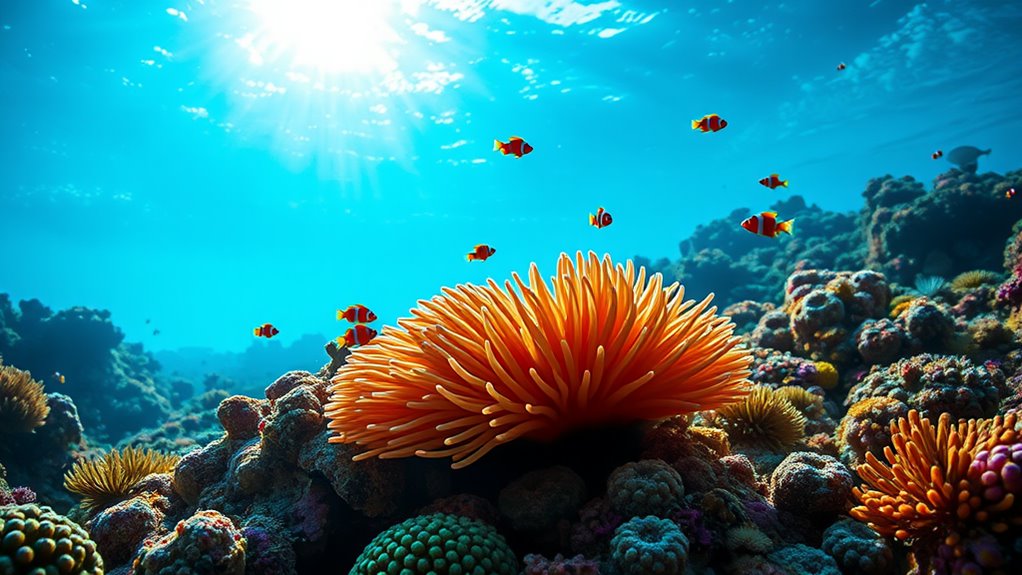
To prevent algae overgrowth in your marine aquarium, start by managing nutrient levels. Keep nitrates below 10 ppm and phosphates at or below 0.03 ppm. Limit light exposure to 8-10 hours a day to reduce algae growth. Regular water changes of 10-15% help dilute excess nutrients and maintain water quality. Invest in a good filtration system to remove waste effectively. Avoid overfeeding by monitoring fish consumption and adjusting portions as needed. Finally, consider adding algae-eating species like snails or crabs. By following these steps, you'll create a healthier environment that discourages unwanted algae. There's more to explore about this topic!
Understand Algae Types
To effectively manage algae in your marine aquarium, it's vital to comprehend the different types of algae that can thrive in your setup. Algae comes in various forms, each with unique characteristics and impacts on your aquarium. Green algae, often seen as a sign of a healthy tank, can be beneficial but can similarly proliferate if left unchecked. Conversely, red algae, though sometimes harmless, can indicate underlying issues in water quality.
Brown algae, typically found in newer aquariums, can be a nuisance, especially if it develops into harmful blooms. These blooms can negatively impact your fish and other aquatic life, so identifying them early is significant. You should familiarize yourself with the algae lifecycle, as grasping how algae reproduce helps you better manage its growth.
Beneficial algae, like macroalgae, can aid in nutrient absorption and provide shelter for marine life. It's important to distinguish between these beneficial types and the more problematic varieties. For effective algae identification, keep a close eye on your aquarium's environment. Factors like light, water quality, and nutrient levels all contribute to algae growth. By regularly testing your water and observing changes, you'll gain insights into the specific growth factors at play in your tank.
Maintain Proper Lighting
Maintaining proper lighting is essential for preventing algae overgrowth in your marine aquarium. You'll want to choose the right light spectrum, control the duration of light exposure, and keep your fixtures clean to guarantee a healthy environment. By managing these aspects, you can greatly reduce the chances of unwanted algae blooms.
Choose Appropriate Light Spectrum
Choosing the right light spectrum is crucial for preventing algae overgrowth in your marine aquarium. By focusing on spectrum balance, you can promote coral health during minimizing unwanted algae. LEDs offer numerous benefits, including energy efficiency and customizable color temperatures, which can improve both growth regulation and visual aesthetics.
Here's a quick reference table to help you choose the appropriate light spectrum:
| Light Type | Color Temperature | Light Intensity |
|---|---|---|
| LED | 10,000K | High |
| T5 Fluorescent | 6,500K | Medium |
| Metal Halide | 20,000K | Very High |
When setting up your lighting, consider light placement and photoperiod management to guarantee your corals thrive without encouraging excessive algae growth. Utilizing light dimming can likewise help create a more natural environment, allowing you to regulate growth effectively. By selecting the right spectrum, you're directly contributing to the health of your aquarium and its inhabitants, securing a balanced ecosystem that serves both the beauty of your setup and the needs of the marine life within.
Control Light Duration
Controlling light duration is vital for maintaining a healthy balance in your marine aquarium. Algae thrive in bright environments, so it's important to manage how long your lights are on each day. You'll want to aim for about 10 to 12 hours of light daily, which mimics natural daylight cycles and keeps algae growth in check.
Using light timers can make this process effortless. By setting a timer, you guarantee your aquarium receives consistent lighting without the need for daily adjustments. This consistency helps maintain a stable environment for your fish and corals during minimizing the risk of excessive algae growth.
Regularly Clean Fixtures
Even with proper light duration, the cleanliness of your lighting fixtures plays a significant role in preventing algae overgrowth. By committing to regular fixture maintenance, you're not just protecting your aquarium; you're creating a healthier environment for the creatures you care for. Dust and grime can block light, leading to uneven illumination and promoting algae growth.
Here's a quick guide to help you keep your fixtures sparkling:
| Fixture Type | Maintenance Frequency | Algae Cleaning Tips |
|---|---|---|
| LED Lights | Monthly | Wipe with a soft cloth |
| Fluorescent Tubes | Bi-Monthly | Use vinegar for stubborn spots |
| Metal Halide | Every 3 Months | Rinse with warm water |
| Sump Lights | Monthly | Vacuum any settled debris |
| Spotlight LEDs | Monthly | Check for leaks and damage |
Control Nutrient Levels
Nutrient levels play an vital role in maintaining a balanced marine aquarium, as excessive nutrients can fuel algae growth. To keep algae at bay, it's important to control these levels by managing nutrient sources. Overfeeding your fish or using low-quality food can introduce unnecessary nutrients that promote algae blooms. Instead, focus on providing a balanced diet and feeding only what your fish can consume in a few minutes.
Regular water changes are a practical way to keep nutrient levels in check. By replacing a portion of the water, you can remove accumulated waste and excess nutrients, creating a healthier environment for your aquatic friends. Moreover, consider investing in quality filtration systems that can effectively eliminate dissolved nutrients, further reducing the risk of unwanted algae competition.
Another effective strategy is to introduce live plants or specific algae-eating fish, such as snails or certain species of tangs. These organisms can help outcompete algae for available nutrients, effectively reducing its growth. Remember, a diverse and well-maintained ecosystem is key to discouraging algae.
Lastly, regularly test your water parameters to monitor nutrient levels. If you notice spikes in nitrates or phosphates, take action immediately by adjusting feeding routines or increasing water changes. By staying proactive about nutrient management, you'll create a flourishing marine environment that serves not just your fish but the entire ecosystem, minimizing the risk of algae overgrowth.
Optimize Water Quality
To keep algae at bay, you need to optimize your water quality. Regular water testing helps you monitor vital parameters, as a well-functioning filtration system removes unwanted particles. Don't forget to maintain proper pH levels, as they play an important role in creating a balanced environment for your marine life.
Regular Water Testing
Regular water testing is essential for maintaining a healthy marine aquarium and preventing algae overgrowth. By regularly checking your water parameters, you can guarantee that conditions remain ideal for your aquatic life and discourage unwanted algae blooms. Using reliable water testing kits, you can monitor key factors like pH, ammonia, nitrate, and phosphate levels, which play a notable role in algae growth.
To effectively manage your aquarium, establish a consistent testing frequency. For most marine environments, it's wise to test your water weekly or bi-weekly. This routine helps you catch any imbalances early before they lead to larger problems, such as algae overgrowth that can harm your fish and corals.
When you notice any irregularities, take prompt action to correct them. Adjusting the water parameters can greatly impact algae control and ultimately benefit the entire ecosystem of your aquarium. Remember, your diligence in water testing protects your investment and creates a thriving environment for the creatures you care for. By committing to regular testing, you're serving both your aquatic community and yourself, guaranteeing a beautiful, healthy marine habitat.
Optimize Filtration System
While maintaining ideal water quality is vital for preventing algae overgrowth, an efficient filtration system is key to achieving this goal. To optimize your aquarium's filtration, start by selecting the right filtration types based on your aquarium size and the specific needs of your marine life. You'll typically need a combination of mechanical, biological, and chemical filtration to guarantee thorough water treatment.
Regular pump maintenance is important for maintaining high flow rates and filtration efficiency. Clean and replace your filter media as needed to prevent clogging, which can hinder water circulation and promote algae growth. It's significant to monitor the flow rate; too much or too little can disrupt the ecosystem.
Investing in high-quality filter media will improve your filtration system's ability to break down waste and toxins, thereby creating a healthier environment for your fish and corals. Remember, a well-functioning filtration system not just improves water quality but also reduces the chances of algae overgrowth, allowing your aquarium to thrive. By being proactive in your filtration approach, you're setting the stage for a beautiful, balanced marine environment that serves all its inhabitants.
Maintain Proper Ph
Maintaining proper pH levels is crucial for maximizing water quality in your marine aquarium, as it directly impacts the health of your fish and corals. To prevent pH fluctuations that can harm your aquatic life, consider these key strategies:
- Regular Testing: Use reliable testing kits to monitor the acidity levels and confirm they stay within the ideal range (typically between 7.8 and 8.5 for marine systems).
- Buffer Solutions: Incorporate buffer solutions to maintain an alkalinity balance, which helps stabilize pH levels over time.
- Carbonate Hardness: Keep an eye on carbonate hardness (KH), as it plays a pivotal role in resisting pH changes. Aim for a KH level between 8-12 dKH for best results.
- Stabilizing Agents: Utilize stabilizing agents during water changes or when introducing new elements to your aquarium. This can help mitigate any drastic shifts in pH caused by biological processes or environmental factors.
Regular Tank Maintenance
A clean aquarium is important for preventing algae overgrowth and guaranteeing a healthy environment for your marine life. Regular tank maintenance not only improves the beauty of your aquarium but also supports the well-being of your fish and plants. Start with routine tank cleaning to remove any uneaten food or debris that can contribute to algae growth.
Perform water changes about 10-15% weekly to maintain water quality and nutrient levels. This helps reduce the chances of an algae bloom by limiting excess nutrients. During these changes, check for proper water circulation; stagnant water can encourage algae growth.
Don't forget to conduct equipment inspections. Verify your filtration system is clean and functioning effectively. Filtration cleaning is important to remove any buildup that may hinder water movement and quality. Furthermore, inspect your substrate regularly. Substrate maintenance is key to preventing detritus accumulation, which can fuel algae growth.
When you notice algae forming, take immediate steps for algae removal. Use algae scrapers or suction tools to manage it before it becomes a more significant problem. Remember, tank cycling is an ongoing process, and staying proactive is crucial.
Introduce Algae-Eating Species
Incorporating algae-eating species into your marine aquarium can greatly assist in controlling algae growth. By adding these helpful creatures, you manage algae and create a flourishing ecosystem. Here are some great options to contemplate:
- Snail Species: Snails are fantastic algae grazers. Look for species like Nerite or Trochus snails, as they work diligently to consume algae and remain relatively peaceful.
- Hermit Crabs: These little scavengers love to munch on algae and keep your tank clean. Just verify they're compatible with your fish to avoid any territorial disputes.
- Urchin Benefits: Sea urchins are excellent at consuming various types of algae, including tough red algae. Their presence can help maintain a balanced aquarium environment, but be mindful of their potential size and compatibility with your other tank inhabitants.
- Shrimp Varieties: Different shrimp species, like the cleaner shrimp or peppermint shrimp, can effectively help control algae and add lively colors to your tank. Confirm they're compatible with your existing fish for a harmonious setup.
Lastly, think about adding sea cucumbers to your tank. They help in breaking down detritus and cleaning the substrate, which can contribute to overall algae control. By thoughtfully introducing these algae-eating species, you'll create a healthier marine environment that benefits all your aquatic friends.
Use Chemical Treatments Wisely
Chemical treatments can be effective tools in managing algae overgrowth in your marine aquarium when used thoughtfully. Nevertheless, it is vital to approach these methods with care to maintain the delicate chemical balance in your tank. Before introducing any chemical treatments, you should test your water parameters, as a well-balanced environment is important for the health of your aquatic life.
When considering chemical treatments, look for algae inhibitors particularly designed for marine aquariums. These products can help control unwanted algae without harming your fish or beneficial organisms. Always read the instructions carefully and start with a lower dosage. This allows you to gauge the treatment's effectiveness and minimize any potential stress on your aquarium's ecosystem.
It is wise to monitor your tank closely after applying any chemical treatments. Watch for changes in fish behavior or water quality, as these can indicate a reaction to the chemicals. If you notice adverse effects, consider performing a partial water change to help restore the chemical balance.
Limit Overfeeding Fish
To keep your aquarium healthy, you need to understand your fish's feeding needs. By monitoring the quantity of food you give them and scheduling regular feedings, you can prevent overfeeding. This not only keeps your fish happy but likewise helps control algae growth.
Understand Fish Feeding Needs
In relation to maintaining a healthy marine aquarium, grasping your fish's feeding needs is vital. Proper fish nutrition plays a significant role in preventing algae overgrowth. By recognizing your fish's dietary requirements, you can establish a suitable feeding schedule that promotes fish health and reduces excess food that leads to algae blooms.
Here are four tips to help you meet your fish's feeding needs:
- Know Your Fish: Research species compatibility and their specific dietary habits to choose the right food types for each fish in your tank.
- Choose Quality Food: Opt for high-quality flakes, pellets, or frozen food that contain important nutrients. Consider dietary supplements for added benefits.
- Develop a Feeding Schedule: Stick to a consistent feeding schedule, ideally once or twice a day, to help regulate your fish's eating habits.
- Use Appropriate Feeding Techniques: Break up food into smaller portions and observe how much your fish consume to avoid overfeeding.
Monitor Food Quantity
Overfeeding fish can lead to serious issues in your marine aquarium, including rampant algae growth. To guarantee a healthy environment for both your fish and aquatic plants, it's crucial to monitor food quantity closely. Adopting effective feeding techniques can greatly help in this regard. Start by comprehending the specific dietary needs of your fish species.
When it comes to portion control, a good rule of thumb is to feed your fish only what they can consume in a few minutes. This prevents excess food from decomposing in the tank, which can contribute to algae blooms. You might likewise consider dividing meals into smaller portions throughout the day if you have multiple fish or species with differing needs.
Using high-quality food can likewise make a difference. Nutrient-rich pellets or flakes can satisfy your fish more efficiently, reducing the temptation to overfeed. By being mindful of how much and how often you feed, you're not just serving your fish better; you're additionally creating a more balanced and sustainable aquatic ecosystem. Remember, a little attention to portion control goes a long way in keeping your marine aquarium thriving.
Schedule Regular Feedings
Establishing a regular feeding schedule can greatly help limit overfeeding fish in your marine aquarium. By practicing portion control, you'll not just maintain the health of your fish but additionally reduce the risk of algae overgrowth. Here are some tips to help you create an effective feeding routine:
- Feed at the Same Time Daily: Choose specific times to feed your fish, making it easier for them to adjust and for you to monitor their intake.
- Measure Portions: Use a measuring spoon or scale to determine how much food to provide. This helps avoid overindulgence.
- Observe Your Fish: Pay attention to how much food they consume in a few minutes. Adjust portions based on their eating habits to prevent leftovers that can decay and fuel algae.
- Incorporate Variety: Rotate the types of food you offer to guarantee balanced nutrition. This keeps your fish healthy and engaged without overfeeding.
Implement Effective Filtration
Effective filtration is crucial for maintaining a healthy marine aquarium and preventing algae overgrowth. When you choose the right filtration system, you're not merely ensuring clean water; you're additionally creating a thriving environment for your aquatic life. Start by incorporating both biological and mechanical filtration into your setup. Biological filtration helps break down harmful toxins, whereas mechanical filtration removes debris and particulates, keeping your water crystal clear.
Pay attention to your filtration media. Selecting high-quality media can greatly improve your filtration efficiency, as some materials are better suited for biological processes than others. Make sure to regularly check and replace your filter media according to the manufacturer's recommendations to maintain peak performance.
Don't overlook filter maintenance. A clean filter works effectively, so clean or replace your mechanical components regularly. This will help maintain pump efficiency, ensuring that water circulates properly throughout your aquarium. If your pump isn't running efficiently, it can lead to stagnant areas where algae thrive.
Lastly, consider filter placement carefully. Position your filter to promote even water flow throughout the tank, which helps prevent dead spots where algae can accumulate. A well-placed filter not only improves circulation but also improves the filtration process. By implementing these effective filtration strategies, you'll create a healthier aquarium ecosystem, making it easier for you to serve your marine life and keep algae at bay.
Monitor Water Parameters
Keeping a close eye on water parameters is essential to preventing algae overgrowth in your marine aquarium. Regular monitoring allows you to catch potential issues early, guaranteeing a healthier environment for your aquatic life. By maintaining the right conditions, you not only promote the well-being of your fish and corals but also implement preventive measures against unwanted algae blooms.
Here are four vital parameters you should monitor regularly:
- Nitrate Levels: Aim for low nitrate levels (below 10 ppm). High nitrates can fuel algae growth, so use biological control methods like live rock or macroalgae to help manage these levels.
- Phosphate Levels: Keep phosphates at or below 0.03 ppm. Phosphates are another culprit in promoting algae. Regular water changes and using phosphate-removing media can be effective preventive measures.
- pH Levels: Maintain a stable pH between 7.8 and 8.5. Fluctuating pH can stress your aquatic life and contribute to algae issues. Test your water weekly to guarantee consistency.
- Salinity: Check salinity regularly, aiming for 1.020 to 1.025 specific gravity. Sudden changes can upset the balance in your aquarium, leading to algae proliferation.
Frequently Asked Questions
How Often Should I Test My Aquarium Water Parameters?
Testing your aquarium water parameters is vital for the health of your aquatic friends. You wouldn't ignore a friend's needs, would you? Regular water testing helps you catch parameter fluctuations before they cause problems. Aim to test weekly for the first month, then bi-weekly or monthly once stability is established. By staying proactive, you're not just caring for your tank; you're ensuring a thriving environment for your cherished fish and plants.
Can I Use Tap Water in My Marine Aquarium?
You might think about using tap water in your marine aquarium, but tap water quality can vary considerably. It often contains chemicals and minerals that aren't ideal for marine life. These minerals can alter the mineral content in your aquarium, potentially harming your fish and corals. It's best to use purified water or tailor-made saltwater to guarantee a healthy environment. Your aquatic friends will thrive with the right water conditions.
What Are Signs of Unhealthy Algae Growth?
When you notice unhealthy algae growth, look for several signs. Different algae types may appear, like green film or brown slime, indicating an imbalance in nutrient levels. If your tank's water looks cloudy or you see excessive algae on surfaces, it's time to take action. Keeping a close eye on these signs helps guarantee a healthier environment for your marine life, allowing you to serve their needs better and maintain a thriving aquarium.
Is It Safe to Use Chemical Treatments With Invertebrates?
Using chemical treatments with invertebrates can be risky. Many chemicals can harm these delicate creatures, leading to unintended consequences in your aquarium. It's crucial to prioritize invertebrate safety when considering any treatment. Instead of relying solely on chemicals, explore chemical alternatives that are particularly designed to be safe for invertebrates. Always research thoroughly and consult with experts, ensuring you make informed decisions that protect the ecosystem you've worked hard to create.
How Long Should the Lights Be on Each Day?
You should keep your aquarium lights on for about 8 to 10 hours a day. This light duration helps maintain a photosynthesis balance, supporting healthy plant growth during minimizing excess algae. It's important to monitor your tank's response and adjust as needed. By providing the right amount of light, you're not just caring for your aquatic life; you're creating a thriving environment that serves the needs of both plants and animals.