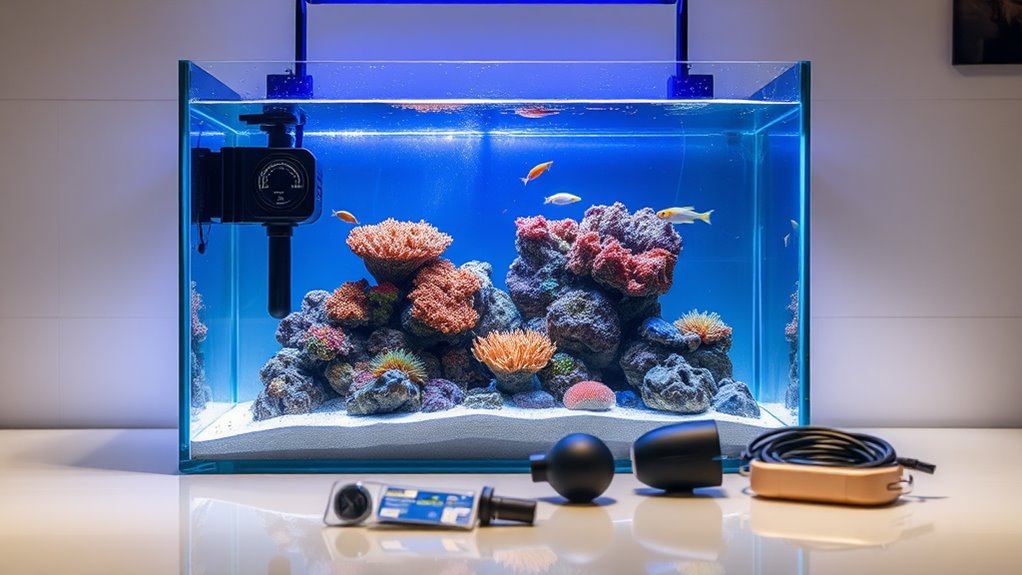
To recognize early signs of illness in your marine fish, watch for clamped fins, color changes, and unusual swimming patterns. Labored breathing or excessive gill movement are serious red flags. Keep an eye on behavioral changes like withdrawal from tank mates and reduced activity levels. You should likewise monitor their eating habits; a sudden loss of appetite often indicates distress. Poor water quality and incompatible tank mates can contribute to stress, so maintain a stable environment. Being aware of these signs will help you act quickly—there's much more you can explore to guarantee your aquatic friends stay healthy.
Common Signs of Illness
When you observe your marine fish, watch for signs that indicate they might be unwell. Early detection of illness is vital for successful disease prevention and can save your fish from further suffering. Look for symptoms like clamped fins, changes in coloration, or unusual swimming patterns. These may seem minor at first, but they can signal the beginning of symptom progression.
Pay close attention to your fish's appetite. If they suddenly stop eating or seem disinterested in food, it's a red flag that something's wrong. Furthermore, observe their gills. Labored breathing or excessive gill movement can likewise indicate distress or illness.
Another warning sign is the presence of lesions, spots, or any abnormal growths on their bodies. These can often signal underlying health issues that require immediate attention. You should also monitor the water quality in your tank regularly. Poor conditions can lead to stress and illness, so maintaining a clean environment is vital for your fish's well-being.
When you notice any of these signs, act quickly. Early intervention can prevent the disease from worsening and spreading to other fish. Always keep a close eye on your marine friends and keep in mind that your attentiveness can make a significant difference in their health. By being proactive and observant, you're not just serving your fish; you're likewise nurturing a thriving aquatic community.
Behavioral Changes to Monitor
Keep an eye out for any behavioral changes in your marine fish, as these can often reveal underlying health issues. Monitoring their behavior closely helps you catch potential problems early, allowing you to provide the care they deserve.
One major aspect to observe is their social interactions. Healthy fish typically engage actively with tank mates, swimming around together or displaying friendly behaviors. If you notice a sudden withdrawal or aggression, it could indicate stress or illness.
Another key area to watch is territorial disputes. Fish that usually coexist peacefully might start showing signs of aggression or claiming space aggressively. This change can signal that something is off in their environment or health.
Here's a quick reference table to help you track these behavioral changes:
| Behavioral Change | Possible Concern |
|---|---|
| Withdrawal from tank mates | Stress, illness, or injury |
| Increased aggression | Territorial stress or illness |
| Reduced activity | General health decline |
Changes in Eating Habits
Changes in eating habits can be one of the most telling signs of illness in marine fish. When you're caring for these delicate creatures, paying close attention to their feeding patterns is crucial. A sudden change in how much or how often your fish eats can signal underlying health issues. For instance, if your fish used to enthusiastically gobble up food but now seems disinterested or refuses to eat altogether, it's time to investigate further.
Appetite fluctuations can occur for various reasons, including stress, water quality changes, or illness. If you notice that your fish are only nibbling at their food or showing a lack of enthusiasm during feeding time, it may indicate discomfort or distress. Verify that your tank's environment remains stable, as fluctuations can easily upset their routine and lead to reduced appetite.
Additionally, keep an eye out for any patterns in feeding habits that seem unusual. If a normally sociable fish starts isolating itself during feeding or if certain fish in a community tank begin to exhibit different eating behaviors, this could point to health concerns. By monitoring these signs closely, you can act quickly to address potential problems.
Physical Appearance Indicators
Observing your marine fish closely can reveal vital physical appearance indicators of illness. These signs can help you act quickly to guarantee their well-being. For instance, keep an eye on fin discoloration, which may suggest stress or disease. If you notice any scale loss, it might indicate a parasitic infection or poor water conditions.
Gill inflammation is another red flag; if your fish is struggling to breathe or their gills appear red and swollen, they may be facing serious health issues. Body lesions can likewise signal bacterial infections, so monitor for any unusual spots or marks on their skin. Furthermore, look out for eye cloudiness. This could be a sign of infection or water quality problems that need addressing.
You should also check for a swelling abdomen, as this can indicate internal issues such as organ failure or infections. Skin ulcers are particularly concerning, often resulting from bacterial or fungal infections. If you observe any of these symptoms, it's essential to act swiftly.
Lastly, be vigilant for color fading. When a fish loses its lively hues, it could be a sign of stress or illness. By paying attention to these physical appearance indicators, you can make sure your marine fish receive the care they need in a timely manner. Remember, early detection is key to maintaining a healthy and thriving aquarium environment.
Environmental Stress Factors
When caring for marine fish, it's vital to monitor environmental stress factors that can impact their health. Poor water quality, sudden temperature changes, and incompatible tank mates can all lead to signs of illness. By keeping an eye on these elements, you can help guarantee your fish thrive in their environment.
Water Quality Impact
Water quality can make or break the health of marine fish, as even slight fluctuations in their environment can lead to significant stress. To maintain a thriving aquatic ecosystem, it's essential to monitor key water parameters regularly.
Here's a quick overview of how these factors can impact your fish:
| Water Quality Factor | Impact on Fish Health |
|---|---|
| pH Levels | Imbalanced pH can cause stress, affecting fish behavior and immune response. |
| Ammonia Spikes | Toxic to fish, even at low levels, leading to gill damage and respiratory issues. |
| Nitrate Accumulation | High levels can lead to chronic stress and reduced growth rates. |
| Oxygen Depletion | Low oxygen levels can cause lethargy, increased aggression, and even suffocation. |
Temperature Fluctuations Effects
Temperature stability is crucial for marine fish health, as even minor fluctuations can lead to stress and illness. When you maintain a consistent temperature, you help your fish thrive. Nevertheless, if you expose them to temperature stress, they can suffer from a range of issues, including weakened immune systems and increased susceptibility to disease.
Acclimation issues often arise when fish are introduced to a new environment with different temperatures. If the change is too abrupt, your fish may struggle to adjust, leading to health problems. To promote a smooth acclimation process, gradually adjust the water temperature before introducing new fish to your tank. This approach minimizes stress and helps your fish adapt more comfortably.
Keep an eye on the temperature in your aquarium, and use a reliable thermometer to monitor fluctuations. If you notice any sudden changes, act quickly to stabilize the environment. Remember, a healthy tank is the foundation for happy fish. By preventing temperature stress and addressing acclimation issues, you can guarantee your fish remain lively and energetic, ultimately enhancing their quality of life.
Tank Mates Compatibility Issues
Choosing the right tank mates for your marine fish is vital to prevent environmental stress. Making sure peaceful coexistence among your fish can greatly improve their well-being and reduce stress levels. Here are a few key considerations:
- Species Compatibility: Research each species' natural behavior to avoid aggressive interactions and territorial disputes.
- Tank Size Considerations: A larger tank can help minimize stress by providing enough space for schooling behavior and hiding spots.
- Feeding Habits: Confirm that all fish can thrive together, as conflicting feeding habits can lead to competition and stress.
When selecting tank mates, focus on behavioral compatibility. Some fish may thrive in a community tank, whereas others prefer solitude. Aim for a balanced mix that promotes environmental enrichment. For instance, combining active swimmers with more sedentary species can create a visually stimulating and harmonious environment.
Importance of Quarantine
Quarantine is crucial for maintaining the health of your marine fish and preventing the spread of disease in your aquarium. By isolating new arrivals or sick fish, you can monitor them closely and address any health issues before they affect your entire tank. The quarantine benefits are significant, as they not only protect your current fish but likewise help you learn more about your new additions' behaviors and needs.
Using effective isolation methods, like a separate quarantine tank, allows you to observe your new fish without the stress of interacting with your established community. You should ideally keep them in this isolated environment for at least two weeks. During this time, watch for any signs of illness, such as unusual swimming patterns or changes in appetite. If you spot any concerning symptoms, you can treat them right away, minimizing the risk of transmission to your healthy fish.
Implementing a quarantine system additionally helps you prevent introducing parasites or diseases that could wreak havoc in your main tank. Remember, even the healthiest-looking fish can carry hidden ailments, so taking this precaution is in everyone's best interest.
When to Seek Professional Help
If you notice unusual behavior changes in your fish, it's time to pay attention. Physical symptoms like discoloration or lesions can signal serious issues, and rapid deterioration is a clear red flag. Don't hesitate to seek professional help when these signs appear; your fish's health depends on it.
Unusual Behavior Changes
Noticing unusual behavior changes in your marine fish can be alarming, and it's crucial to act quickly. When your fish exhibit signs like hiding behavior, erratic movements, or aggressive interactions with tank mates, it may indicate stress or illness. Watch for these specific behaviors:
- Surface swimming: If your fish are spending more time near the surface, it could signal respiratory distress.
- Lethargic response: A lack of energy and diminished activity can suggest underlying health issues.
- Color fading: This often indicates stress or illness, making your fish more vulnerable.
Other signs like gill flaring, fin flicking, or abnormal schooling patterns are likewise red flags. If you notice your fish displaying these behaviors, don't hesitate to seek professional help. Early intervention can make a significant difference in their recovery and overall well-being. Remember, the sooner you address these issues, the better chance your fish have for a swift return to health. By comprehending and responding to these behavioral changes, you can provide your marine fish with the care they need and deserve.
Physical Symptoms Observed
During the observation of your marine fish, it is essential to pay attention to any physical symptoms that may signal a serious health issue. If you notice fin rot, this could indicate bacterial infection, and you should act quickly. Body lesions and skin discoloration are likewise red flags; they often point to external parasites or infections. A swollen abdomen might suggest internal problems like organ issues or parasites, whereas abnormal growths can be signs of tumors or other ailments.
Color fading can indicate stress or illness, so keep an eye out for that change. Furthermore, scale loss can be a result of poor water quality or disease. Eye cloudiness might suggest a more severe underlying issue, and gill flukes can cause significant respiratory distress, so it's critical to check your fish's gills regularly. Pay attention to any excessive mucus production on the skin, as this can be a protective response to irritants or infections.
If you observe any of these symptoms, it's time to seek professional help. Early intervention can make a significant difference in your fish's health and overall well-being.
Rapid Deterioration Signs
When physical symptoms escalate or change swiftly, it's a clear indication that immediate action is required. As a dedicated caretaker of marine fish, you must stay vigilant and recognize rapid deterioration signs. This is essential for ensuring the health of your aquatic friends. Early intervention can make a significant difference, so symptom awareness is key.
Look for these warning signs:
- Sudden loss of appetite: If your fish stops eating abruptly, it might be a sign of distress.
- Rapid gill movement: Increased gill activity can indicate respiratory issues, which need prompt attention.
- Behavioral changes: If your fish becomes lethargic, hides excessively, or shows unusual aggression, it's time to act.
If you observe any of these symptoms, don't hesitate to seek professional help. The sooner you address these issues, the better the chances of recovery. Remember, your swift response not just impacts the well-being of your fish but likewise reflects your commitment to their care. By staying alert and proactive, you can provide the best possible environment for your marine companions.
Frequently Asked Questions
Can Certain Fish Species Show Different Illness Signs?
Absolutely, different fish species can show varying illness symptoms based on their unique behavior. For instance, as one species might exhibit lethargy and a loss of appetite, another might display rapid gill movement or changes in coloration. By observing these species behaviors closely, you can identify specific signs of distress or illness. Comprehending these variations is essential in providing the best care and support for your aquatic friends, ensuring their health and well-being.
How Can I Prevent Illness in Marine Fish?
To prevent illness in marine fish, you should focus on preventive measures and stress reduction. Keeping the water clean and maintaining stable parameters is essential. Make certain your fish aren't overcrowded, as that increases stress levels. Offer a balanced diet rich in nutrients to improve their immune systems. Regularly monitor your fish for any changes in behavior or appearance. By creating a healthy environment and minimizing stress, you'll enrich their overall well-being.
Are There Specific Diseases Common to Certain Fish Types?
Visualize a garden, where each flower has unique needs. Just as certain plants are more prone to specific pests, various fish types face common diseases. For instance, clownfish often battle marine ich, whereas angelfish can fall victim to velvet disease. By comprehending these common diseases associated with specific fish types, you can better serve your aquatic friends, ensuring they thrive in their underwater paradise. Knowledge is your best tool in nurturing their health.
What Role Does Water Quality Play in Fish Health?
Water quality is vital for your fish's health. You'll want to monitor pH levels, as extremes can stress them. Ammonia toxicity and nitrate accumulation can harm them considerably, so regular testing is fundamental. Keep an eye on temperature fluctuations, which can make fish vulnerable. Confirm oxygen saturation is adequate, and be mindful of salinity changes, as they can affect your fish's well-being. By maintaining quality, you help your fish thrive and prevent illness.
How Often Should I Perform Health Checks on My Fish?
You should perform health checks on your fish regularly to guarantee their well-being. Routine assessments are crucial for effective health monitoring. Aim for at least once a week, but adjust based on your fish's needs and tank conditions. Observing their behavior, appetite, and appearance can help you catch any potential issues early. By staying proactive, you're not just caring for your fish; you're creating a healthier environment for them to thrive.