
You’ll need a spacious aquarium, at least 50 gallons per cuttlefish, with a suitable substrate like gravel over sand. Create complex structures with rocky reef formations and artificial elements, and provide ample hiding places with safe and easily accessible options. Set up water circulation to replicate natural ocean currents, and establish a natural day-night cycle with gradual light changes. Add decorations and plants for visual interest and water quality support. By following these steps, you’ll be well on your way to creating a thriving habitat – and there’s still more to discover to guarantee your cuttlefish thrive in their new home. Regular water quality testing is essential to maintain optimal conditions for cuttlefish, as they are sensitive to changes in their environment. Additionally, when introducing cuttlefish to new environments, be sure to acclimate them slowly to prevent stress. Monitoring their behavior after the transition will also help you gauge how well they are adapting to their new habitat.
Choosing the Right Aquarium Size
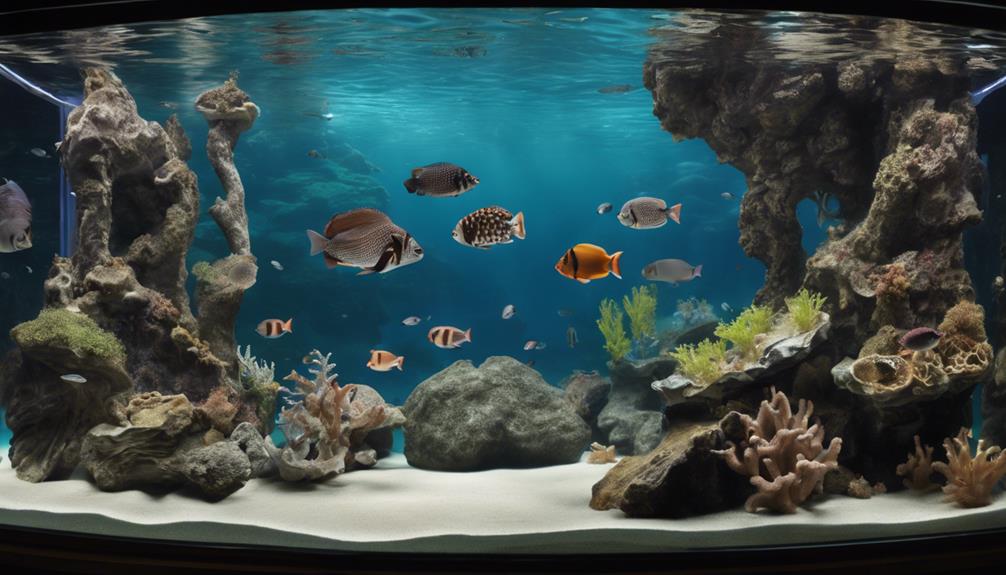
When deciding on an aquarium for your cuttlefish, start by considering the minimum tank size required to provide a stable, thriving environment, which is at least 50 gallons per animal. Cuttlefish are active swimmers and need room to move around, so it's important to prioritize aquatic proportions. A larger tank will provide a more stable water environment, which is essential for your cuttlefish's health.
A 50-gallon tank is the minimum recommended size, but if you're planning to keep multiple cuttlefish, you'll need an even larger tank. Remember, it's always better to err on the side of caution when it comes to tank size. A larger tank will also give you more flexibility when it comes to decorating and creating hiding places for your cuttlefish.
When choosing an aquarium, consider the space efficiency of the tank. A longer, horizontal tank is often a better choice than a tall, narrow one. This will provide your cuttlefish with more swimming space and allow you to create a more natural environment. Additionally, a larger tank will give you more room to add decorations, plants, and other features that will help create a thriving environment for your cuttlefish. By prioritizing tank size and aquatic proportions, you'll be well on your way to creating a safe and healthy habitat for your cuttlefish.
Selecting a Suitable Substrate
As you prepare to welcome your cuttlefish to their new home, you're likely wondering what kind of substrate will best replicate their natural environment. You'll need to take into account the type of substrate, as well as its depth and texture, to guarantee your cuttlefish can thrive. By weighing the pros and cons of different options, you'll be able to create a comfortable and stimulating space for your cephalopod companions.
Substrate Types Compared
You'll need to choose a substrate that mimics the cuttlefish's natural environment, which typically consists of sandy or muddy areas with scattered rocks and shells. When selecting a substrate, you have two main options: gravel or sand. Gravel is a popular choice for cuttlefish habitats because of its benefits. It allows for good water circulation, which helps maintain water quality and reduces the risk of disease. Gravel also provides a comfortable surface for your cuttlefish to move around on. On the other hand, sand can be a hazardous choice. The fine particles can easily get stuck in your cuttlefish's gills, causing respiratory problems. Additionally, sand can be ingested, leading to digestive issues. While it may seem like a natural choice, sand is not the safest option for your cuttlefish. By choosing gravel, you can create a safe and comfortable environment for your cuttlefish to thrive in.
Depth and Texture Matters
Since you've chosen gravel as the primary substrate, it's time to contemplate the ideal depth and texture to create a natural habitat for your cuttlefish. You want to mimic the seafloor topography, where ocean currents shape the terrain. A well-designed substrate will provide hiding spots, reduce stress, and encourage natural behavior.
| Depth (inches) | Texture |
|---|---|
| 2-3 | Fine, smooth gravel for open areas |
| 4-5 | Coarse, rough gravel for rocky outcrops |
| 1-2 | Fine, soft gravel for burrowing areas |
| 3-4 | Mixed, irregular gravel for varied terrain |
| 5-6 | Coarse, large gravel for dramatic features |
When selecting the ideal depth and texture, consider the natural habitats of cuttlefish. In the wild, they inhabit areas with varied terrain, from smooth sandy bottoms to rocky outcrops. By recreating this diversity, you'll provide your cuttlefish with a stimulating environment that promotes exploration and exercise. Remember, a well-designed substrate is essential for the health and well-being of your cuttlefish.
Creating Complex Structures
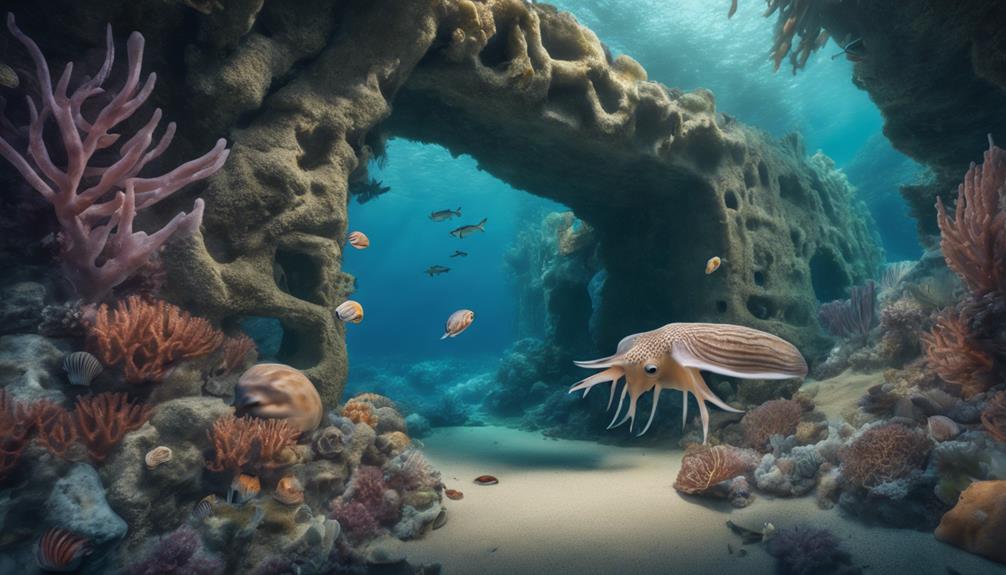
As you design your cuttlefish habitat, you'll want to create complex structures that mimic their natural environment. You'll need to incorporate features like rocky reef formations, which provide ample hiding spots and visual interest. By adding enclosed cave systems, you'll give your cuttlefish a sense of security and comfort in their new home.
Rocky Reef Formations
Create a complex structure by stacking rocks of varying sizes to mimic the natural, irregular shapes found in wild cuttlefish habitats. This will provide your cuttlefish with a stimulating environment that encourages exploration and exercise. When building your rocky reef formation, prioritize stability to avoid any potential hazards. Start by placing larger rocks at the base, then add smaller ones on top, ensuring a secure foundation. You can also incorporate artificial landscaping elements, like ceramic or plastic decorations, to add visual interest and create hiding places for your cuttlefish.
To create a more realistic environment, incorporate rocky outcrops, which are ideal for cuttlefish to climb and perch on. You can arrange the rocks to form small caves or overhangs, providing your cuttlefish with a sense of security and shelter. Remember to leave enough swimming space and avoid overcrowding the tank, as cuttlefish need room to move and thrive. By creating a naturalistic rocky reef formation, you'll provide your cuttlefish with a stimulating and safe environment that meets their unique needs.
Enclosed Cave Systems
By incorporating enclosed cave systems, you can design complex structures that mimic the intricate networks of crevices and tunnels found in natural cuttlefish habitats, providing your cephalopods with a sense of security and shelter. This type of cave architecture is essential for creating a thriving aquatic landscape that simulates the cuttlefish's natural environment.
To create a secure and stimulating habitat, consider the following design elements:
- Incorporate multiple entrance and exit points to encourage exploration and reduce stress.
- Use a combination of open and narrow tunnels to provide visual barriers and hiding spots.
- Incorporate vertical elements, such as pillars or ridges, to create visual interest and depth.
- Add some hidden areas, like small caves or crevices, to provide a sense of security and seclusion.
- Consider adding some aquatic plants or coral to create a natural, immersive environment.
Providing Ample Hiding Places
You'll want to incorporate a variety of hiding places into your cuttlefish's habitat, such as rocky caves, coral formations, and sunken ships, to mimic their natural environment. This will provide your cuttlefish with a sense of security and comfort, as they are naturally inclined to hide and seek shelter.
To create a diverse range of hiding places, consider incorporating the following ideas into your habitat design:
| Hiding Place | Description |
|---|---|
| Rocky Caves | Create a series of rocky caves using natural rock formations or artificial rocks |
| Coral Formations | Incorporate artificial coral formations or live coral to provide hiding places and visual interest |
| Artificial Shelters | Add artificial shelters, such as PVC pipes or ceramic tubes, to provide additional hiding places |
Remember to prioritize your cuttlefish's safety when designing their habitat. Avoid using sharp or rough materials that could cause injury, and make sure that all hiding places are easily accessible and escape-proof. By providing ample hiding places, you'll be creating a comfortable and secure environment for your cuttlefish to thrive in.
Setting Up Water Circulation
Proper water circulation is crucial to maintain water quality and oxygen levels, so it's essential that you establish a circulation system that mimics the natural ocean currents. Cuttlefish are adapted to living in areas with strong ocean currents, and replicating this environment will help keep them healthy and thriving.
To achieve this, you'll need to take into account your water pump options. Here are a few things to bear in mind:
- Powerheads: These are a popular choice for creating water circulation, as they're energy-efficient and easy to install.
- Submersible pumps: These can be placed directly in the tank, allowing for more precise control over water circulation.
- External pumps: These are often more powerful and can be used to create strong currents, but they can be noisier and require more maintenance.
- Wave makers: These devices create a wave-like motion in the tank, which can help simulate the natural ocean currents.
- Adjustable flow rates: Make sure your pump allows for adjustable flow rates, so you can customize the circulation to suit your cuttlefish's needs.
Maintaining Optimal Water Quality
With your circulation system in place, now it's time to focus on maintaining excellent water quality, which is important for your cuttlefish's health and survival. You'll need to regularly test the water to make sure it's safe for your cuttlefish. Invest in a reliable water testing kit that can detect ammonia, nitrite, and nitrate levels. These chemicals can be harmful to your cuttlefish, so it's essential to monitor them closely.
Perform water tests weekly, and make adjustments as needed. Check the pH level, which should be between 7.9 and 8.4 for cuttlefish. Also, monitor the water's alkalinity, which should be between 8 and 12 dKH. If you notice any fluctuations, make adjustments to maintain ideal levels.
Regular water changes are also important for maintaining excellent water quality. Replace 10-15% of the tank water weekly to remove built-up toxins and maintain stable chemical levels. Use a gravel vacuum to remove debris and waste products that can affect water quality.
Creating a Natural Day-Night Cycle
Every 24 hours, your cuttlefish expect a natural day-night cycle, which simulates their natural habitats' gradual changes from light to dark and back again. You can achieve this by implementing a lighting schedule that mimics the natural rhythms of the ocean. This is essential for your cuttlefish's overall health and well-being, as it helps regulate their internal biological clock.
To create a natural day-night cycle, follow these guidelines:
- Gradual changes: Use timers or automated lighting systems to create gradual changes from light to dark, simulating the sunrise and sunset of their natural habitat.
- Biological entrainment: Expose your cuttlefish to a consistent light-dark cycle to help regulate their internal clock, ensuring they're active during the day and restful at night.
- Daylight spectrum: Use LED or T5 lighting with a daylight spectrum (5000-6500K) to simulate the natural light of the ocean's surface.
- Moonlight simulation: Incorporate a moonlight phase during the night, using a low-intensity blue or purple light to mimic the moon's gentle glow.
- Consistency is key: Stick to a consistent lighting schedule, even on weekends or days off, to maintain a stable environment for your cuttlefish.
Adding Decorations and Plants
You can create a visually appealing and stimulating environment for your cuttlefish by incorporating decorations and plants that mimic their natural habitat. This will help reduce stress and promote natural behavior. When choosing decorations, consider including rocks, coral, and shells that provide hiding places and visual interest.
Aquatic landscaping is vital in creating a natural habitat for cuttlefish. You can use plants like seaweed to create a sense of security and provide a natural food source. Seaweed diversity is essential, as it provides a varied diet and helps maintain water quality.
Here's a list of recommended decorations and plants for your cuttlefish habitat:
| Decoration/Plant | Purpose | Benefits |
|---|---|---|
| Live Rock | Provides hiding places and visual interest | Increases sense of security, promotes natural behavior |
| Seaweed (various species) | Provides food and oxygen, maintains water quality | Supports seaweed diversity, reduces stress |
| Coral | Creates visual interest, provides hiding places | Increases sense of security, promotes natural behavior |
| Shells | Provides hiding places, creates visual interest | Increases sense of security, promotes natural behavior |
| Artificial Plants | Creates visual interest, provides hiding places | Increases sense of security, promotes natural behavior |
Remember to choose decorations and plants that are safe and suitable for your cuttlefish. Avoid using anything that may cause harm or introduce toxins into the habitat. By incorporating these elements, you'll create a thriving and stimulating environment for your cuttlefish.
Cycling the Aquarium Environment

As you set up your cuttlefish habitat, you'll need to cycle the aquarium environment to create a healthy space for your cephalopod friends. This process involves understanding the bacterial colonization stages, monitoring water parameters, and establishing beneficial bacteria that'll keep your cuttlefish thriving. By grasping these essential steps, you'll be well on your way to creating a balanced and safe environment for your cuttlefish.
Bacterial Colonization Stages
To establish a thriving environment for your cuttlefish, it's important to understand the bacterial colonization stages, which involve the gradual development of beneficial microorganisms that break down waste products in your aquarium. This process is essential for maintaining a healthy and balanced ecosystem.
During the bacterial colonization stages, you'll observe the formation of a biofilm, a complex community of microorganisms that adhere to surfaces in your aquarium. This biofilm plays a significant role in breaking down organic matter and recycling nutrients. As the biofilm develops, microbe interactions become increasingly significant, with different species working together to create a stable environment.
Here are some key stages to expect during the bacterial colonization process:
- Initial colonization: Beneficial bacteria begin to colonize surfaces in your aquarium.
- Biofilm formation: A complex community of microorganisms adheres to surfaces, breaking down organic matter.
- Microbe interactions: Different species of bacteria interact, creating a stable and balanced ecosystem.
- Nutrient cycling: Beneficial bacteria break down waste products, recycling nutrients for your cuttlefish.
- Maturation: The ecosystem reaches a stable state, providing a healthy environment for your cuttlefish.
Monitoring Water Parameters
During the initial cycling phase, closely monitoring water parameters is essential to maintain a stable and healthy environment for your cuttlefish. You'll need to perform regular water testing to make sure that the water chemistry is suitable for your cuttlefish. This involves checking parameters such as ammonia, nitrite, and nitrate levels, as well as pH, temperature, and salinity.
Parameter fluctuations can be detrimental to your cuttlefish's health, so it's vital to identify any changes early on. You should test the water daily, and make adjustments as needed. For example, if you notice a spike in ammonia levels, you may need to perform a partial water change to dilute the toxin.
Establishing Beneficial Bacteria
You'll need to introduce beneficial bacteria to your aquarium to break down waste products and create a balanced ecosystem for your cuttlefish. This process, known as cycling, allows beneficial microorganisms to establish themselves and maintain a healthy environment.
To achieve this, you'll need to foster an environment that promotes bacterial resilience and microbe diversity. Here are some essential steps to follow:
- Add a bacterial supplement or introduce a small amount of gravel from an established aquarium to seed the tank.
- Maintain a stable water temperature between 72°F to 82°F (22°C to 28°C) to promote bacterial growth.
- Ensure adequate oxygen levels by providing good water circulation and avoiding overcrowding.
- Monitor ammonia and nitrite levels, as high levels can inhibit beneficial bacteria growth.
- Be patient, as the cycling process can take several weeks to complete.
Acclimating Your Cuttlefish
As you introduce your cuttlefish to its new environment, it's important to acclimate it slowly and carefully to prevent shocking its sensitive system. A sudden change can cause cuttlefish stress, which can be harmful to its health. To guarantee a smooth adjustment, float the unopened bag containing your cuttlefish in the tank for about 15-20 minutes. This allows the water in the bag to reach the same temperature as the tank water.
Next, open the bag and add a small amount of tank water to the bag every few minutes. This gradual introduction of tank water helps your cuttlefish adjust to the new water chemistry. Repeat this process for about 30-40 minutes, or until the bag is mostly filled with tank water. Once you've completed the acclimation process, use a soft-mesh net to gently transfer your cuttlefish to its new home. Be sure to discard the bag water and any excess water from the bag to prevent any contamination.
During the acclimation process, it's crucial to monitor your cuttlefish for signs of stress, such as rapid breathing, erratic swimming, or changes in color. If you notice any of these symptoms, slow down the acclimation process or seek advice from a knowledgeable aquarist. Remember, regular water changes will help maintain a healthy environment for your cuttlefish. By following these steps, you'll be well on your way to providing a safe and thriving habitat for your cuttlefish.
Frequently Asked Questions
Can I Keep Multiple Cuttlefish Together in the Same Aquarium?
You're wondering if you can keep multiple cuttlefish together in the same aquarium. The answer is, it's not recommended. Cuttlefish have a complex social hierarchy and can become aggressive towards each other, especially when competing for food or space. In fact, they're known to form social bonds, but only with a specific dominant individual. Keeping multiple cuttlefish together can lead to stress, injury, or even death. It's best to keep them separate to guarantee their safety and well-being.
How Often Should I Feed My Cuttlefish and What Diet Is Best?
'Absence of planning is planning to fail,' as the old adage goes. When it comes to feeding your cuttlefish, you'll want to plan carefully. Feed them 2-3 times a day, only as much as they can consume within a few minutes. Provide a varied diet that includes live prey alternatives, such as frozen shrimp or crab, and consider adding Cuttlebone supplements to make sure they're getting enough calcium. Remember, overfeeding can be deadly, so err on the side of caution and monitor their intake closely.
Can I Use a Regular Aquarium Filter or Do I Need a Specialized One?
When choosing a filter for your cuttlefish tank, you'll want to prioritize safety and efficiency. You can't use just any regular aquarium filter, as cuttlefish require strong water flow to thrive. Look for specialized filters designed for high-flow systems, such as canister filters or high-performance hang-on-back filters. These will provide the necessary water circulation and oxygenation for your cuttlefish to stay healthy.
How Long Does It Take for a Cuttlefish to Fully Mature and Change Color?
"When in Rome, do as the Romans do" – and when it comes to cuttlefish, you'll want to understand their unique development. You'll be amazed to know that cuttlefish mature rapidly, reaching adulthood in just 6-12 months. During this time, they undergo a remarkable Color Shift, changing from a dull gray to vibrant hues. As they grow, their color-changing abilities will leave you in awe.
Are Cuttlefish Prone to Any Specific Diseases or Health Issues?
You'll want to keep an eye out for potential health issues in your cuttlefish. Unfortunately, they can be prone to certain diseases and parasites. Cuttlefish parasites, like protozoa and crustaceans, can cause harm. You should also watch for eye infections, which can be a real concern. Regular water changes and a clean environment can help prevent these issues. Be sure to monitor your cuttlefish's behavior and appearance, and seek help if you notice any unusual signs or symptoms.


