
You're taking the first step towards creating a thriving environment for your cuttlefish by recognizing that understanding their behavior is key to providing excellent care. Cuttlefish are nocturnal hunters, using their exceptional night vision to forage for prey. They have a complex social hierarchy, communicate through color changes, and fiercely defend their territories. By recognizing their unique characteristics, like camouflage abilities and agonistic behaviors, you can tailor their care to meet their needs. As you explore their behavior, you'll uncover more secrets to creating a harmonious and stimulating environment.
Nocturnal Hunting and Feeding Patterns
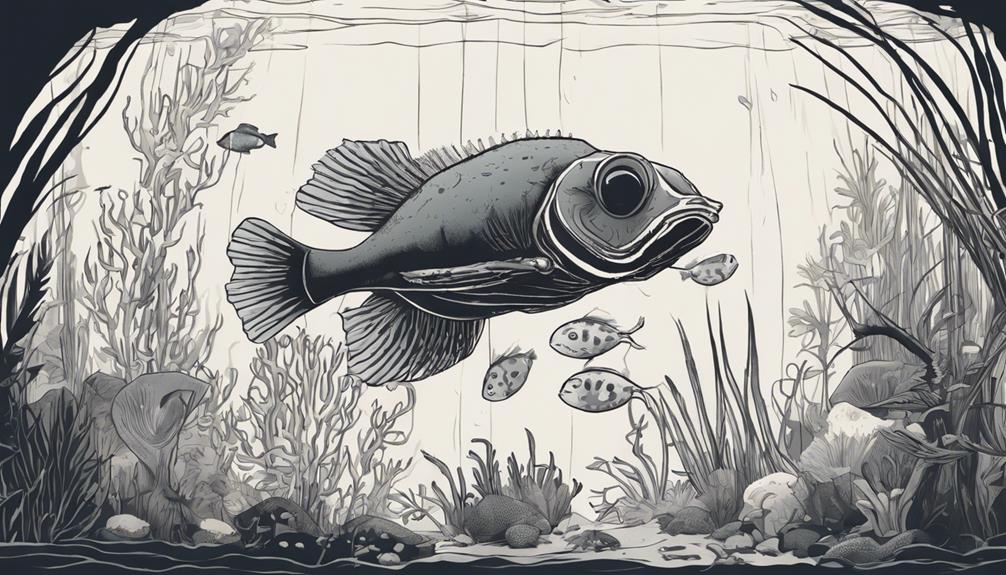
As you explore the nocturnal world of cuttlefish, you'll discover that these masters of disguise have evolved to hunt and feed under the cover of darkness, exploiting the reduced visibility to their advantage. In the wild, cuttlefish have adapted to thrive in low-light conditions, where their remarkable camouflage abilities allow them to sneak up on unsuspecting prey. Moonlight foraging becomes an essential strategy, as they venture out to hunt small fish, crustaceans, and mollusks in the dimly lit waters.
As the night wears on, midnight scavenging becomes an important aspect of their feeding behavior. Cuttlefish will scour the seafloor, using their sensitive tentacles to detect and capture prey that's hiding in crevices or under rocks. Their exceptional night vision, thanks to highly sensitive photoreceptors, enables them to navigate and hunt in near-total darkness.
In captivity, it's essential to replicate this natural behavior by providing a dark or dimly lit environment, simulating the moon's gentle glow. By doing so, you'll encourage your cuttlefish to exhibit their natural foraging behavior, ensuring they receive the mental and physical stimulation they need to thrive. By understanding and catering to their nocturnal nature, you'll create a safe and nurturing environment that supports the overall health and well-being of your cuttlefish.
Social Structure and Communication
You'll find that cuttlefish, having mastered the art of solitary nocturnal hunting, also possess a sophisticated social structure and communication system that's just as vital. In the wild, they've developed a complex social hierarchy, where dominant individuals lead subordinate ones. This social structure is essential for their survival, as it helps them navigate their environment and find food.
| Social Hierarchy | Communication Codes |
|---|---|
| Dominant | Flashing bright colors to assert dominance |
| Subordinate | Displaying submissive postures to avoid conflict |
| Mating Pair | Pulsating color changes to signal courtship |
| Territorial Warning | Rapid color shifts to deter intruders |
| Alarm Call | Flashes of black to alert others of predators |
You'll notice that cuttlefish use a variety of communication codes to convey information. They can change the color and texture of their skin to signal aggression, courtship, or warning. These codes are essential for maintaining social harmony and avoiding conflicts. By understanding these codes, you can better care for your cuttlefish and provide a safe and stimulating environment. By recognizing their social hierarchy and communication methods, you can create a harmonious and thriving aquatic community.
Territorial Behavior and Space

As you explore the world of cuttlefish behavior, it's important to understand their territorial nature.
In their natural habitat, cuttlefish fiercely defend a personal territory, which can range from a few square meters to an entire shipwreck, against other cuttlefish. This domain establishment is vital for their survival, as it provides a sense of security and reduces stress. You'll often see cuttlefish performing complex courtship displays to establish their territory, warning other cuttlefish to stay away.
When it comes to boundary marking, cuttlefish use a range of techniques to define their territory. They'll release ink to create a visual barrier, and they'll also use body language to signal their dominance. You might observe them changing color, posture, or even posturing to deter intruders.
Here are some key takeaways to keep in mind:
- Respect their space: Avoid overcrowding your cuttlefish tank, as this can lead to territorial disputes and stress.
- Provide hiding places: Offer plenty of hiding places and visual barriers to help your cuttlefish feel secure and establish their territory.
- Monitor behavior: Keep an eye on your cuttlefish's behavior, and adjust their environment accordingly to minimize stress and promote a sense of calm.
Mating and Courtship Rituals
Cuttlefish courtship rituals are an essential dance of color changes, posturing, and body language, with males vying for the attention of females by displaying vibrant patterns and impressive displays of strength. As you observe these rituals, you'll notice males performing elaborate displays to impress potential mates. They'll change the texture and color of their skin to create complex patterns, often featuring bright stripes or spots. These male displays serve as a way to showcase their health, strength, and genetic quality to potential mates.
Female cuttlefish, on the other hand, play a vital role in determining the success of these courtship rituals. Their receptivity to a male's display can make or break his chances of mating. You may notice females displaying subtle changes in color or posture to signal their interest or disinterest in a suitor. By paying attention to these cues, you can better understand the complex dynamics at play during cuttlefish courtship.
As you care for cuttlefish, recognizing these courtship behaviors is essential for creating a safe and healthy environment. By providing a suitable habitat and minimizing stress, you can encourage natural behaviors and promote the well-being of your cuttlefish. By understanding the intricacies of cuttlefish mating and courtship rituals, you can better support the needs of your aquatic companions.
Camouflage and Defense Mechanisms

What makes cuttlefish masters of disguise, allowing them to evade predators and sneak up on prey? The answer lies in their extraordinary camouflage and defense mechanisms. As you care for your cuttlefish, it's essential to understand these remarkable abilities to provide a safe and comfortable environment.
Cuttlefish have evolved remarkable strategies to blend in with their surroundings. Chromatic adaptation, for instance, enables them to change the color and texture of their skin to match their environment. This impressive ability helps them hide from predators or sneak up on unsuspecting prey. You can observe this phenomenon in your own cuttlefish by watching how they adapt to changes in their tank's decor or lighting.
To better appreciate these masters of disguise, consider the following:
- Postural deception: Cuttlefish can alter their body shape to mimic rocks, seaweed, or other underwater features, making it difficult for predators to detect them.
- Chromatophore expansion: By expanding or contracting specialized cells called chromatophores, cuttlefish can rapidly change the color and pattern of their skin to blend in with their surroundings.
- Biological mimicry: Cuttlefish can imitate the movement and appearance of other sea creatures, such as flounders or sea snakes, to avoid detection or lure in prey.
Learning and Problem-Solving Abilities
You'll be fascinated to learn that your clever cuttlefish can also outsmart its predators and even you, its caretaker, with its impressive learning and problem-solving abilities. These remarkable creatures have evolved to adapt to their environment, demonstrating a high level of cognitive adaptation. Through intelligent exploration, they've developed innovative strategies to hunt, evade predators, and even interact with their surroundings.
In captivity, you can observe your cuttlefish's problem-solving skills by providing them with puzzles and interactive toys. For instance, you can place a treat inside a shell or a maze, encouraging your cuttlefish to figure out how to retrieve it. This not only stimulates their cognitive abilities but also keeps them engaged and active. Be prepared to be amazed as your cuttlefish learns and adapts to new challenges, often surprising you with their creative solutions.
As a caretaker, it's essential to recognize and appreciate your cuttlefish's intelligence. By providing a stimulating environment that encourages learning and exploration, you'll foster a strong bond with your pet and promote their overall well-being. Remember, a happy and engaged cuttlefish is a healthy one, so be sure to challenge and entertain your clever companion regularly. By doing so, you'll create a safe and nurturing environment that promotes cognitive growth and development.
Agonistic Behavior and Stress

Recognizing the subtle signs of agonistic behavior and stress in your cuttlefish is vital, as it can greatly impact their overall health and well-being. Agonistic behavior refers to aggressive interactions between cuttlefish, often driven by a desire to establish dominance in a social hierarchy. As a caregiver, it's important to identify stress triggers and address them promptly to prevent long-term harm.
Some common signs of agonistic behavior and stress in cuttlefish include:
- Changes in coloration or patterning: A stressed cuttlefish may display brighter or more muted colors, indicating anxiety or aggression.
- Increased fin nipping or chasing: Cuttlefish may engage in aggressive behavior, such as fin nipping or chasing, to establish dominance or defend territory.
- Decreased appetite or hiding behavior: Stressed cuttlefish may exhibit decreased appetite or hide more frequently, indicating a need for a safer, more peaceful environment.
Environmental Enrichment Strategies
When exploring environmental enrichment strategies for cuttlefish, you'll want to contemplate how to stimulate their senses, provide variety in hiding places, and offer texture exploration options. By incorporating these elements, you can create an engaging environment that promotes natural behavior and reduces stress. By doing so, you'll be well on your way to creating a thriving environment that meets the unique needs of these fascinating creatures.
Sensory Stimulation Methods
Cuttlefish thrive on mental and sensory stimulation, which is why providing a varied and dynamic environment is essential for their well-being. As a responsible aquarist, you can create an engaging environment that caters to their unique needs. Sensory stimulation methods are vital in keeping your cuttlefish happy and healthy.
Here are some effective ways to stimulate your cuttlefish's senses:
- Tactile exploration: Provide a variety of textures, such as smooth rocks, coral, or even artificial decorations, to encourage exploration and discovery.
- Visual novelty: Introduce new visual stimuli, like colorful toys or mirrors, to keep your cuttlefish engaged and curious.
- Sensory contrast: Create areas with different temperatures, water flows, or salinity levels to provide a range of sensory experiences.
Hiding Place Variety
You can create an engaging environment for your cuttlefish by incorporating a diverse range of hiding places, from intricately designed artificial reefs to naturalistic rock crevices, to satisfy their instinctual need for concealment.
Providing a variety of hiding places is essential for your cuttlefish's emotional well-being and stress reduction. You can achieve this by incorporating decorative caves, artificial reefs, and other creative hiding spots. This will allow your cuttlefish to feel secure and comfortable in their environment.
When designing your aquarium, consider the natural habitats of cuttlefish and incorporate elements that mimic these environments. For example, you can create a rocky outcropping with crevices and caves, or add artificial reefs with intricate nooks and crannies.
Remember to rotate and rearrange the hiding places periodically to keep your cuttlefish engaged and stimulated. This will encourage them to explore and interact with their environment, reducing stress and promoting overall health. By providing a diverse range of hiding places, you can create a safe and stimulating environment for your cuttlefish to thrive.
Texture Exploration Options
By incorporating a variety of textures into your aquarium, you can stimulate your cuttlefish's natural curiosity and encourage exploration. Cuttlefish are naturally curious creatures, and providing them with a range of textures can help keep them engaged and active.
In addition to visual stimulation, texture exploration can add a new dimension to your cuttlefish's environment. You can create a rich sensory experience by incorporating different textures, such as:
- Rocky surfaces, which can provide a stimulating surface for your cuttlefish to crawl on and explore
- Soft fabrics, like nylon mesh or soft coral, which can provide a comfortable and calming environment
- Rough, sandy areas, which can mimic the natural seabed and encourage digging and burrowing behaviors
Health Indicators and Monitoring

As you observe your cuttlefish, you'll want to identify key health indicators to guarantee their well-being. You'll need to monitor their body language signs, such as posture, color changes, and swimming patterns, which can signal stress or illness. Additionally, you should perform regular water quality checks to prevent any potential health issues.
Body Language Signs
Cuttlefish often display specific postures, color changes, or fin positions that serve as valuable indicators of their overall health and well-being. As a responsible cuttlefish owner, it's crucial to recognize these body language signs to guarantee your pet's safety and well-being.
By observing your cuttlefish's behavior, you can identify potential issues before they escalate. Here are some key signs to look out for:
- Fin posture: A healthy cuttlefish typically holds its fins upright or slightly angled. If your cuttlefish is holding its fins down or clamped to its body, it may be a sign of stress or illness.
- Eye rotation: Cuttlefish often rotate their eyes to communicate or express excitement. However, rapid or erratic eye rotation can indicate anxiety or discomfort.
- Color changes: Cuttlefish can change color to blend in with their surroundings or express emotions. If your cuttlefish is displaying unusual or intense color patterns, it may be a sign of stress or excitement.
Water Quality Checks
You need to regularly monitor your cuttlefish's tank water quality, as poor conditions can quickly lead to stress, illness, or even death. Neglecting water quality checks can have devastating consequences for your pet's health. You should test the water for pH levels regularly, as cuttlefish are sensitive to even slight changes. pH testing is vital to guarantee the water remains between 7.9 and 8.4, the ideal range for your cuttlefish.
Ammonia monitoring is also essential, as high levels can be toxic to your pet. Ammonia can build up quickly, especially in overcrowded or poorly maintained tanks. You should aim to maintain an ammonia level of zero, as even small amounts can cause harm. Regular water changes, around 10-15% every week, will help keep ammonia levels in check. By prioritizing water quality checks, you'll create a safe and healthy environment for your cuttlefish to thrive. Remember, it's always better to err on the side of caution when it comes to your pet's health. Stay vigilant, and your cuttlefish will reward you with a long and happy life.
Species-Specific Care Considerations
When setting up an aquarium for a cuttlefish, it's essential to research the specific needs of your species, as different types, such as the common cuttlefish, dwarf cuttlefish, or flamboyant cuttlefish, have unique requirements. Each species has distinct characteristics, habits, and needs that you'll need to cater to guarantee their well-being. For instance, some species are more sensitive to water quality, while others require specific temperature ranges or hiding places.
To provide the best care for your cuttlefish, consider the following species-specific considerations:
- Nutrient cycling: Different species have varying nutrient requirements, so it's important to research the specific cycling needs of your cuttlefish to maintain excellent water quality.
- Microhabitat design: Each species has unique habitat preferences, such as hiding places, substrate types, and water flow rates, which need to be replicated in the aquarium to create a comfortable environment.
- Food and feeding habits: Cuttlefish species have distinct feeding habits, such as frequency, type, and size of prey, which you'll need to accommodate to ensure proper nutrition and prevent malnutrition.
Frequently Asked Questions
Can Cuttlefish Recognize Their Owners or Other Aquarium Inhabitants?
Just like Odysseus, you're exploring the uncharted waters of cuttlefish cognition. Can these cephalopods recognize their owners or other aquarium inhabitants? The answer is yes! Cuttlefish are capable of social bonding, and they use visual cues to remember and distinguish between individuals. They can even recognize their owners' faces and respond to their presence. By understanding these complex behaviors, you'll create a safe and nurturing environment for your cuttlefish to thrive.
How Often Should I Rotate Cuttlefish Tank Decorations to Prevent Boredom?
You're wondering how often to rotate cuttlefish tank decorations to prevent boredom. The key is to strike a balance between novelty and stability. Aim to rearrange your tank every 2-3 weeks, introducing new decorations or altering existing ones. This will provide environmental stimulation and visual interest, keeping your cuttlefish engaged. Remember, sudden changes can stress your pet, so make adjustments gradually to guarantee a safe and stimulating environment.
Can Cuttlefish Be Kept With Other Marine Animals in a Community Tank?
'When in Rome, do as the Romans do' – but in this case, don't put all your marine animals in one tank without careful consideration. You're wise to question whether cuttlefish can coexist with other species. The truth is, they're best kept alone. Aggressive tank mates can stress them out, and their unique needs may clash with others. Confirm species compatibility before introducing tank mates to avoid a recipe for disaster. It's better to err on the side of caution and prioritize your cuttlefish's safety.
What Is the Recommended Water Flow Rate for a Cuttlefish Aquarium?
When setting up your cuttlefish aquarium, you'll want to prioritize water flow. Aim for a moderate water flow rate of 10-15 gallons per hour. This will create gentle water currents and flow patterns that simulate their natural habitat. Be cautious not to create strong currents that might stress your cuttlefish. You're aiming for a comfortable, peaceful environment, so adjust the flow rate accordingly to guarantee your cuttlefish thrive.
How Long Do Cuttlefish Typically Live in Captivity With Proper Care?
You’re probably wondering how long your cuttlefish will thrive in its new home. On average, cuttlefish can live for around 2-5 years in captivity with proper care. That’s a decent life expectancy, considering their wild counterparts typically live for only 1-3 years. By providing ideal conditions, you can guarantee your cuttlefish reaches its full captive longevity. To ensure your cuttlefish flourishes, it’s crucial to understand the various cuttlefish lifespan and growth factors that play a role in their well-being. Water quality, temperature, diet, and tank size are all significant elements that can influence how long your cuttlefish will thrive. Regular maintenance and monitoring of these conditions can help you provide a stable environment, allowing your pet to reach its full potential.


