
To guarantee a balanced ecosystem in your cuttlefish aquarium, you'll need to get it right from the start. Begin by choosing a tank that's at least 55 gallons, with a stable base and secure lid. Next, cycle your aquarium properly to establish beneficial bacteria. Maintain ideal water conditions by monitoring pH levels and performing regular water changes. Offer a varied diet, including meaty foods and calcium-rich supplements. Finally, monitor waste levels and perform regular cleanings to prevent toxin buildup. By following these steps, you'll be well on your way to creating a thriving environment – and you'll want to explore more ways to tailor your aquarium to your cuttlefish's unique needs.
Selecting the Right Aquarium Size

When setting up a cuttlefish aquarium, you'll need a tank that can accommodate the adult size of these intelligent, shape-shifting creatures, which can grow up to 18 inches in length. A minimum tank size of 55 gallons is recommended, but larger tanks are always better. You'll want to take into account the aquarium's shape as well, as cuttlefish are active swimmers and need plenty of open space to move around. Rectangular tanks are a good choice, as they provide more swimming room than tall, narrow tanks.
In terms of space efficiency, a longer tank is better than a taller one. Cuttlefish are horizontal swimmers, so they need length to swim, not height to climb. A longer tank also gives you more options for aquascaping, allowing you to create hiding places and visual interest for your cuttlefish. Look for tanks with a wide, stable base to prevent tipping, and consider a tank with a secure lid, as cuttlefish are notorious escape artists. When setting up your cuttlefish habitat, it’s essential to keep their specific needs in mind. Incorporating features like smooth rocks, plants, and caves can provide both shelter and stimulation. For more detailed guidance on ensuring an ideal environment, check out these cuttlefish tank design tips to ensure your aquatic companions thrive.
Cycling the Aquarium Properly
Now that you've selected the right aquarium size and shape, it's time to focus on creating a healthy environment by cycling the aquarium properly. Cycling your aquarium is a critical step in establishing a thriving ecosystem for your cuttlefish. This process allows beneficial bacteria to colonize the tank, breaking down waste and preventing toxic buildup.
To cycle your aquarium, start by setting it up with gravel, decorations, and water. Add a small amount of fish food or ammonia to stimulate bacterial growth. Over the next few weeks, monitor the tank's ammonia and nitrite levels. You'll notice bacterial blooms, which might cause the water to appear cloudy. Don't worry – this is a normal part of the cycling process.
However, keep a close eye on nitrogen spikes, which can be deadly to your cuttlefish. Regularly test the water for ammonia, nitrite, and nitrate levels. Perform partial water changes (about 25%) every week to maintain excellent water quality.
As the tank cycles, you'll notice the bacterial blooms subsiding, and the water clearing. This indicates that the beneficial bacteria are thriving and breaking down waste efficiently. Once the tank is fully cycled, you can introduce your cuttlefish to their new home, confident that they'll thrive in a safe and healthy environment. Remember to continue monitoring water quality and performing regular maintenance to ensure a balanced ecosystem.
Maintaining Optimal Water Conditions

You'll need to maintain ideal water conditions to keep your cuttlefish thriving, as they're highly sensitive to water quality. Even slight pH fluctuations can cause stress, so it's important to monitor and adjust the pH level regularly. Aim for a stable pH range between 7.9 and 8.4, and make adjustments gradually to avoid sudden changes.
Regular water changes are also essential to maintain the best water conditions. Replace 10-15% of the tank water weekly to remove built-up toxins and prevent the buildup of ammonia and nitrite. This will help maintain a healthy balance of beneficial bacteria, which are crucial for breaking down waste.
Proper water circulation is also critical to prevent stagnation and ensure oxygen-rich water reaches all areas of the tank. Install powerheads or adjust the direction of your filter outlets to create gentle currents that mimic the natural ocean environment. This will help reduce stress and promote healthy swimming patterns in your cuttlefish.
Providing a Balanced Diet
To guarantee your cuttlefish receive the nutrients they need to thrive, provide a varied diet that includes a mix of meaty foods, such as frozen mysis shrimp, krill, and squid, supplemented with calcium-rich foods like cuttlebone or crushed coral. This will make sure your cuttlefish get the nutrient variety they need to stay healthy.
You should also consider adding live foods to their diet. Live foods, such as brine shrimp or mysis, provide essential nutrients and stimulate your cuttlefish's natural hunting behavior. However, make sure to gut-load the live foods with nutrient-rich foods before feeding them to your cuttlefish to maximize their nutritional value.
It's also important to avoid over-reliance on a single food source. Rotate your cuttlefish's diet regularly to ensure they receive a broad range of nutrients. For example, you can feed them frozen foods one day and live foods the next. This will help prevent nutritional deficiencies and guarantee your cuttlefish receive a balanced diet.
Monitoring and Controlling Waste
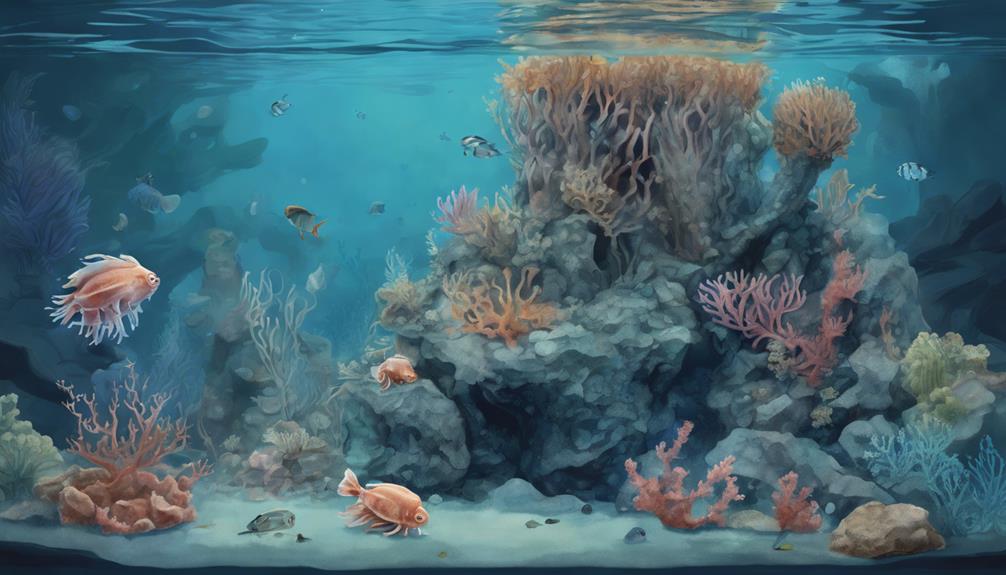
Regularly test the water parameters in your cuttlefish aquarium to detect any potential issues before they become major problems. Monitoring water quality is essential in maintaining a healthy environment for your cuttlefish. Waste management is a vital aspect of aquarium maintenance, as excess waste can lead to a buildup of toxins, causing harm to your cuttlefish.
To effectively manage waste, follow these steps:
- Monitor ammonia and nitrite levels: Regularly test for these toxic compounds to make sure they're within safe ranges.
- Perform regular water changes: Replace 10-15% of your aquarium water weekly to eliminate built-up waste products.
- Maintain a balanced biological load: Ensure your aquarium's biological load, including cuttlefish, plants, and microorganisms, is well-balanced to prevent excessive waste production.
- Clean your aquarium regularly: Remove any decaying matter, such as dead plants or food, to avoid waste accumulation.
Frequently Asked Questions
How Often Should I Change the Aquarium's Decorative Items?
What a coincidence that you're thinking of rearranging your aquarium's decor just when your cuttlefish are getting bored! You should change the decorative items every 4-6 weeks to maintain aquatic landscaping and provide a sense of exploration. Rotate or replace 20-30% of the decorations to guarantee a variety of hiding spots and visual interest. This frequency also helps prevent bacterial buildup and keeps your cuttlefish engaged and active, safeguarding their safety and well-being.
Can I Keep Other Marine Animals With My Cuttlefish?
When considering tankmates for your cuttlefish, you'll want to exercise caution. Not all marine animals make suitable companions. You'll need to carefully select species that are compatible with cuttlefish. Research tankmates that share similar water requirements and temperaments. Avoid mixing aggressive species or those that might see your cuttlefish as prey. Remember, species compatibility is key to a harmonious tank.
Will My Cuttlefish Recognize and Interact With Me?
You're going to be amazed by how quickly your cuttlefish becomes your new BFF! Seriously, these creatures are ridiculously intelligent. They can recognize and interact with you, and even seem to enjoy human bonding. In fact, they've been known to swim up to their owners and change color to communicate. By spending quality time with your cuttlefish, you'll form a strong bond, and they'll learn to trust and respond to your presence.
Can I Use a Tank Divider to Separate Fighting Cuttlefish?
You're wondering if a tank divider is the solution to separate fighting cuttlefish. While it may seem like a good idea, it's not the most effective way to address aggression. In fact, tank segregation can even lead to more stress and anxiety for your cuttlefish. Instead, observe their behavior and identify the root cause of the fighting. By understanding their fish behavior, you can take steps to create a more harmonious environment, ensuring a safe and thriving space for your cuttlefish.
How Do I Handle a Cuttlefish That Refuses to Eat?
Did you know that cuttlefish have a highly developed sense of taste and can detect even slight changes in their food? If your cuttlefish refuses to eat, don't panic! It's not uncommon for them to develop food aversion. Try introducing appetite stimulants like live or frozen foods, or even slightly warmed-up meaty foods to spark their interest. Observe your cuttlefish's behavior and adjust their diet accordingly to guarantee their safety and well-being.


