
When setting up a cuttlefish tank in a small space, prioritize a well-designed layout and essential equipment. Choose a longer, wider tank with a minimum capacity of 50 gallons per adult cuttlefish. Select low-wattage lighting, a filtration system with mechanical, biological, and chemical components, and a timer for a natural day-night cycle. Utilize corner decorations, plants, and vertical decorations to maximize space. Leave open swimming areas and hide filtration systems behind decorations. With the right approach, you'll be well on your way to creating a thriving aquatic environment – and there's more to explore to make sure your cuttlefish thrive in their compact home.
Choosing the Right Tank Size

When deliberating on a cuttlefish tank, you'll need to take into account a minimum capacity of at least 50 gallons per adult cuttlefish, as these intelligent, active creatures require ample space to thrive. With their impressive size and energetic nature, cuttlefish need room to swim, hunt, and exercise, making tank proportions an essential consideration.
Space constraints can be particularly challenging when setting up a cuttlefish tank, especially in small spaces. To make sure your cuttlefish have enough room, consider a longer tank rather than a tall one. A longer tank provides a larger swimming area, which is vital for these active creatures.
You should also think about the tank's width and height in relation to its length. A good rule of thumb is to opt for a tank with a width that's at least 1/3 to 1/2 of its length. This will give your cuttlefish ample space to move around comfortably.
Lastly, don't forget to leave some space between the water surface and the tank's lid. Cuttlefish are skilled escape artists, and you'll want to prevent them from jumping out of the tank. By taking these tank proportions and space constraints into account, you'll be well on your way to creating a safe and thriving environment for your cuttlefish.
Selecting Essential Equipment and Accessories
As you’re preparing to welcome your cuttlefish to their new home, you’ll need to equip their tank with the appropriate gear to guarantee their health, happiness, and overall well-being. This means selecting essential equipment and accessories that cater to their unique needs. When setting up a cuttlefish tank, it’s crucial to prioritize water quality and ensure proper filtration, as these creatures are sensitive to changes in their environment. You’ll also want to provide a suitable substrate, such as sand or gravel, to mimic their natural habitat and facilitate digging behaviors. Additionally, incorporating hiding spots and live rock can help create a stimulating environment that promotes their natural instincts and reduces stress.
First and foremost, a vital filtration system is important. You'll need to choose from various filtration types, such as mechanical, biological, or chemical filtration. Mechanical filtration removes debris and waste, while biological filtration breaks down ammonia and nitrite. Chemical filtration, on the other hand, removes impurities and toxins. Consider a combination of these filtration types to ensure ideal water quality.
Next, you'll need to contemplate lighting options. Cuttlefish are sensitive to light, so it's essential to provide a photoperiod that mimics their natural environment. You can opt for LED, T5, or metal halide lighting, but be sure to choose a low-wattage option to avoid overheating the tank. Additionally, consider investing in a timer to simulate a natural day-night cycle.
Other essential equipment includes a heater, thermometer, and hydrometer. A heater will maintain a stable water temperature, while a thermometer will allow you to monitor the temperature. A hydrometer, on the other hand, will help you track the tank's specific gravity.
Designing a Space-Saving Layout
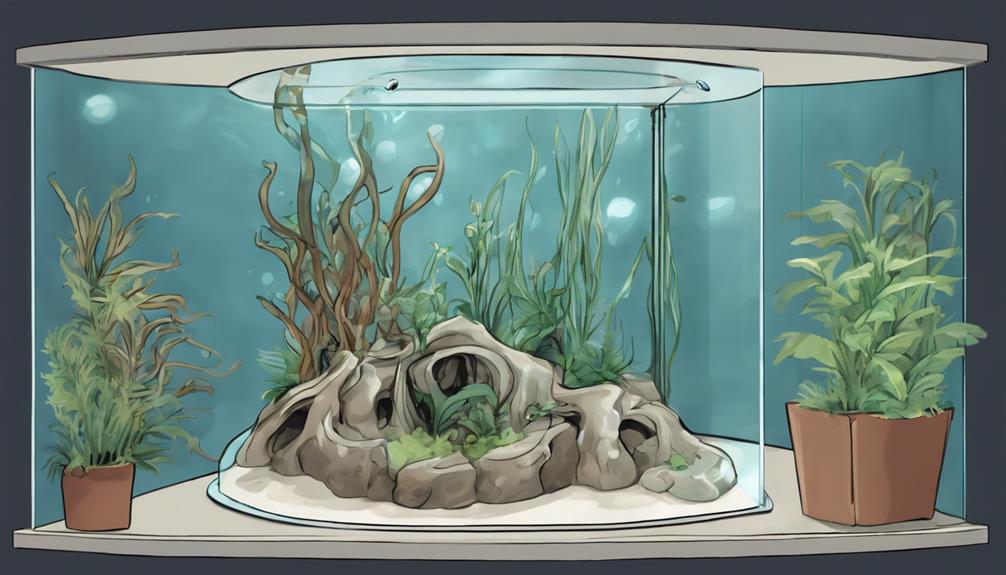
You'll need to create a space-saving layout that maximizes your tank's real estate while providing ample hiding places and visual barriers for your cuttlefish. Since cuttlefish are naturally curious and love to hide, you'll want to design a layout that accommodates their needs while keeping your tank's footprint small.
To make the most of your tank's space, consider the following design principles:
| Design Principle | Description |
|---|---|
| Corner utilization | Use corner decorations or plants to create hiding places and visual barriers |
| Vertical stacking | Stack decorations or plants vertically to maximize space |
| Open swimming areas | Leave enough open space for your cuttlefish to swim freely |
| Hidden filtration | Place filtration systems behind decorations or plants |
| Visual barriers | Use plants or decorations to break up the line of sight |
Creating a Thriving Aquatic Environment
Now that you've designed a space-saving layout, it's time to focus on creating a thriving aquatic environment that mimics the natural habitats of cuttlefish. This is vital for their health and well-being, as cuttlefish are sensitive to their surroundings. To create an ideal environment, consider the following essential elements:
- Lighting options: Cuttlefish are naturally adapted to dim, blue-ish light, so choose LED lights with a color temperature around 10,000K. Avoid direct sunlight, which can promote algae growth and stress your cuttlefish.
- Water movement: Cuttlefish thrive in areas with moderate water currents. You can achieve this by placing powerheads or adjusting the direction of your filter outlets.
- Aquatic plants: Add some live plants like Caulerpa or Halimeda to provide hiding places and visual stimulation for your cuttlefish. These plants are also great for maintaining good water quality.
- Substrate and decorations: Use a deep, fine-grained substrate like sand or mud to mimic the seafloor. Add some rocks, coral, or artificial decorations to create hiding places and visual interest.
Maintaining Water Quality and Health
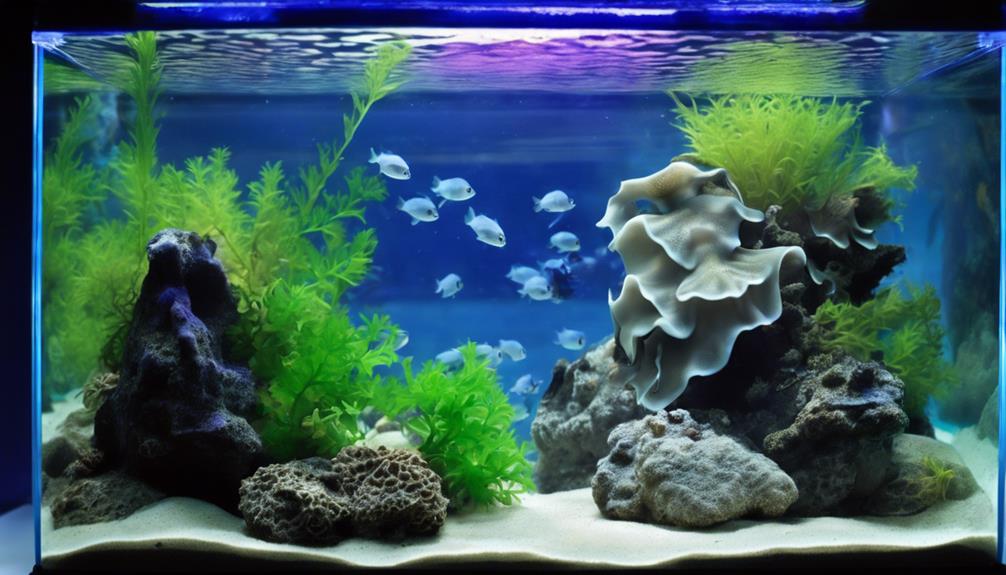
Monitoring water parameters and performing regular maintenance are essential to maintaining water quality and health in your cuttlefish tank. You'll want to keep a close eye on ammonia, nitrite, and nitrate levels to make sure your tank is cycled properly. This process, known as water cycling, allows beneficial bacteria to establish themselves and break down waste products.
To achieve a balanced ecosystem, you'll need to facilitate biofiltration. This can be achieved by introducing media with high surface areas, such as ceramic rings or bio-balls, which provide a habitat for beneficial bacteria to thrive. Regularly test your water for signs of stress, like elevated ammonia or nitrite levels, and perform partial water changes (around 10-15% every week) to maintain ideal water quality.
Additionally, make it a habit to clean your tank regularly. Remove any debris or decaying matter, and vacuum the substrate to prevent the buildup of toxins. Be sure to rinse your filter media regularly to prevent clogging and maintain ideal water flow. By staying vigilant and proactive, you'll create a safe and healthy environment for your cuttlefish to thrive. Remember, a well-maintained tank is essential for the health and longevity of your cuttlefish, so stay committed to regular maintenance and monitoring.
Frequently Asked Questions
Can I Keep Multiple Cuttlefish Together in a Small Tank?
You're considering keeping multiple cuttlefish together in a small tank, but beware – it's essential to avoid a recipe for disaster! Cuttlefish establish a social hierarchy, and in close quarters, dominant ones will bully the others. To avoid fin nipping and stress, it's important to provide a tank division or separate areas for each cuttlefish to reduce aggression. Remember, safety first – prioritize your cuttlefish's well-being and consider a single-specimen tank or a larger space for multiple inhabitants.
Do Cuttlefish Require a Specific Type of Aquarium Gravel?
When choosing gravel for your cuttlefish tank, you'll want to prioritize gravel quality and substrate depth. Opt for smooth, rounded gravel that won't cause injury or trap your cuttlefish. A depth of at least 2-3 inches is recommended to allow for burrowing. Avoid sharp or coarse gravel, as it can harm your cuttlefish. By selecting the right gravel, you'll create a safe and comfortable environment for your cuttlefish to thrive.
How Often Should I Feed My Cuttlefish in Captivity?
You're wondering how often to feed your cuttlefish in captivity. When it comes to Cuttlefish Nutrition, it's important to establish a consistent Feeding Schedule to promote their best health. You should feed your cuttlefish 2-3 times a day, only as much as they can consume within a few minutes. Overfeeding can lead to water quality issues, so monitor their appetite and adjust accordingly. Remember, it's better to err on the side of caution to keep your cuttlefish safe and thriving.
Can I Keep a Cuttlefish With Other Marine Species?
Are you ready to risk your cuttlefish's life by adding tankmates without doing your research? Don't take the chance! When considering species compatibility, remember that cuttlefish can be territorial and have specific needs. You'll need to research thoroughly to make certain any potential tankmates won't harass or compete with your cuttlefish. Remember, safety first! Prioritize your cuttlefish's well-being by choosing compatible species that thrive in similar environments.
How Long Do Cuttlefish Typically Live in a Well-Maintained Tank?
You're probably wondering how long your cuttlefish will thrive in its new home. Typically, cuttlefish can live up to 2-3 years in a well-maintained tank. That's a decent tank longevity, considering their natural lifespan in the wild is around 1-2 years. With proper care, your cuttlefish can enjoy a longer, healthier life, and you'll get to enjoy their fascinating antics for years to come!


