
You'll be astonished at the profound impact a well-planned cuttlefish tank layout can have on reducing stress and aggression, while promoting natural behaviors and overall well-being. A well-designed layout reduces stress by providing ample hiding places, visual barriers, and open swimming areas. It encourages social interaction, stimulates natural hunting behaviors, and promotes a balanced environment. By prioritizing your cuttlefish's needs, you'll create a thriving environment that supports their physical and mental health. As you explore the intricacies of cuttlefish care, you'll discover the secrets to revealing a harmonious and thriving underwater world.
Reduces Stress and Aggression

By providing a visually stimulating environment, you can greatly reduce stress and aggression in your cuttlefish. A well-planned tank layout is essential in creating a calming environment that promotes relaxation and reduces anxiety in your cuttlefish. When it comes to tank dynamics, a balanced and harmonious setup can work wonders in reducing stress and aggression.
A cluttered or cramped tank can lead to feelings of frustration and irritability in your cuttlefish, which can manifest as aggressive behavior. On the other hand, a spacious and well-organized tank with plenty of hiding places and visual barriers can help your cuttlefish feel secure and relaxed. By incorporating elements like plants, rocks, and other decorations, you can create a calming environment that mimics the natural habitat of your cuttlefish.
Additionally, a well-planned tank layout can help to reduce territorial behavior and aggression between cuttlefish. By providing separate areas for feeding, hiding, and resting, you can create a sense of calm and reduce competition among your cuttlefish. By incorporating these elements, you can create a peaceful and stress-free environment that allows your cuttlefish to thrive.
Promotes Natural Behaviors
When designing a cuttlefish tank, you'll want to encourage natural behaviors that mimic their wild habits. By incorporating specific features, you can stimulate their natural instincts and create a more engaging environment. You'll achieve this by providing cave exploration incentives and offering a variety of hiding places, which we'll explore further.
Cave Exploration Incentives
To encourage your cuttlefish to engage in cave exploration, a well-designed tank layout should incorporate incentives that mimic their natural habitat, such as dark, narrow crevices and hidden areas containing treats or toys. This will stimulate their natural curiosity and encourage them to venture into these areas, promoting exercise and mental stimulation.
To create an engaging cave system, consider the following design elements:
- Twists and Turns: Incorporate winding tunnels and passages that challenge your cuttlefish to navigate through the cave system.
- Hidden Chambers: Create hidden areas containing treats or toys, encouraging your cuttlefish to search and discover new treasures.
- Varied Textures: Incorporate different textures, such as rocks, coral, and sand, to create a diverse and engaging environment.
- Dark Areas: Include dark, secluded areas that mimic the cuttlefish's natural habitat, allowing them to feel secure and relaxed.
Hiding Place Variety
Providing a variety of hiding places that cater to your cuttlefish's unique preferences encourages them to exhibit natural behaviors like stalking, ambushing, and resting. You can create a stimulating environment by incorporating different types of hiding places, such as:
| Hiding Place Type | Description | Benefits |
|---|---|---|
| Rocky outcrops | Natural-looking rocks with crevices and overhangs | Provides hiding spots and shade |
| Decorative plants | Artificial or live plants with dense foliage | Offers shelter and visual stimulation |
| Artificial caves | Custom-made or commercial cave systems | Encourages exploration and resting |
Encourages Social Interaction

By incorporating multiple cuttlefish in a well-designed tank, you create an environment that fosters social interaction and encourages bonding among these intelligent creatures. Cuttlefish are known to thrive in groups, exhibiting schooling behavior that promotes group dynamics and social learning. In a well-planned tank, you can observe your cuttlefish engaging in playful interactions, communicating through body language, and even displaying courtship behaviors.
To promote social interaction in your tank, consider the following:
- Provide ample space: Guarantee your tank is large enough to accommodate multiple cuttlefish, allowing them to swim and interact freely.
- Create hiding places: Incorporate rocks, plants, and other decorations to provide hiding places and encourage exploration.
- Maintain water quality: Regularly test and sustain ideal water quality to reduce stress and promote a healthy environment.
- Introduce compatible tankmates: Research and introduce compatible species that complement your cuttlefish, promoting a harmonious community.
Increases Swimming Space
When designing a cuttlefish tank, you'll want to prioritize increasing swimming space to keep your cephalopods happy and healthy. You'll need to think about ideal tank dimensions that provide ample room for your cuttlefish to swim freely. By utilizing corner space effectively and creating open swimming areas, you'll be well on your way to creating a thriving environment for your cuttlefish.
Optimal Tank Dimensions
You’ll need a tank that’s at least 20 gallons to provide your cuttlefish with sufficient swimming space, as they can grow up to 15 inches in length. This will guarantee your cuttlefish have room to roam and exercise, reducing stress and promoting overall health. When it comes to ideal tank dimensions, consider the following key factors: When setting up a cuttlefish tank, it’s crucial to ensure that the water parameters, such as temperature and salinity, are properly maintained, as these cephalopods are quite sensitive to changes in their environment. Additionally, providing plenty of hiding spots and structures within the tank can help mimic their natural habitat, offering them security and enrichment. By carefully considering these elements, you can create a thriving environment that encourages the well-being of your cuttlefish.
- Length: A longer tank allows for more swimming space, which is crucial for cuttlefish. Aim for a tank that's at least 36 inches long.
- Width: A wider tank provides more space for your cuttlefish to move around. Opt for a tank that's at least 12 inches wide.
- Height: While cuttlefish don't swim vertically, a taller tank can help with water circulation and aquatic landscaping. Aim for a tank that's at least 18 inches tall.
- Aspect Ratio: A tank with a longer length and width than height will provide the most swimming space for your cuttlefish.
Corner Space Utilization
To maximize swimming space, consider a tank layout that incorporates corner space utilization, allowing your cuttlefish to navigate effortlessly around the tank's perimeter. This design approach guarantees that every inch of your tank is used efficiently, providing your cuttlefish with ample space to roam. By incorporating decorative accents, such as plants or rocks, into the corners of your tank, you can create a visually appealing environment that also serves to break up the space and create hiding spots for your cuttlefish.
One of the biggest aquascaping challenges is making the most of the often-wasted corner space. By using creative aquascaping techniques, you can turn these areas into functional and aesthetically pleasing spaces. For example, you can use curved or angled decorations to create a seamless connection between the corner and the rest of the tank. This not only increases swimming space but also adds visual interest to your tank. By utilizing corner space, you can create a safe and engaging environment that promotes the health and well-being of your cuttlefish.
Open Swimming Areas
By incorporating open swimming areas into your cuttlefish tank layout, you're creating large, uninterrupted spaces that allow your cuttlefish to swim freely and exercise naturally. This is essential for their overall health and wellbeing, as cuttlefish are active swimmers that require ample space to move around. Open swimming areas also promote healthy current flows, which help maintain good water circulation and clarity.
Here are some benefits of incorporating open swimming areas into your tank layout:
- Increased swimming space: Providing your cuttlefish with ample space to swim helps reduce stress and promotes exercise.
- Improved water circulation: Open swimming areas allow for better water circulation, which helps maintain good water clarity and reduces the risk of stagnant areas.
- Enhanced visual appeal: Open swimming areas create a visually appealing environment, making it easier to observe and enjoy your cuttlefish.
- Reduced risk of disease: By promoting healthy water circulation and reducing stagnation, open swimming areas help reduce the risk of disease and illness in your cuttlefish.
Provides Visual Barriers

Cuttlefish rely on visual barriers to feel secure, and a well-designed tank layout should incorporate decorations that provide plenty of hiding spots. You want to create an environment where your cuttlefish feel protected and comfortable. Visual barriers are essential in achieving this goal. By incorporating decorative elements, such as rocks, plants, or coral, you can create a sense of security for your cuttlefish.
In aquatic landscaping, visual barriers can be achieved through the strategic placement of decorations. For instance, you can place a decorative rock or a plant in a corner of the tank, creating a hiding spot for your cuttlefish. This will allow them to feel safe and secure, reducing stress and anxiety. Additionally, you can use vertical decorations, such as a trellis or a column, to create visual barriers and separate areas of the tank.
Hides and Retreats Matter
Providing multiple hides and retreats in your tank layout gives your cuttlefish the freedom to choose their own comfort zones, reducing stress and anxiety. This is important because cuttlefish are naturally skittish creatures that thrive in environments with plenty of hiding spots. By incorporating various decorative options, you can create a sense of security and comfort for your aquatic friend.
Here are some essential hide and retreat options to keep in mind:
- Rocky crevices: Create a natural-looking landscape with rocks and crevices for your cuttlefish to hide in.
- Plant shelters: Incorporate aquatic plants with broad leaves or dense foliage to provide sheltered areas.
- Cave systems: Design a cave system using rocks, coral, or artificial decorations to provide a sense of security.
- Decorative tunnels: Add tunnels or pipes made of coral, rock, or other decorative materials to create hiding spots.
When designing your aquatic landscaping, remember to prioritize your cuttlefish's sense of security. By providing multiple hides and retreats, you'll create a stress-free environment that allows your cuttlefish to thrive. This thoughtful approach to tank layout will help you create a happy and healthy environment for your aquatic friend.
Open Swimming Areas
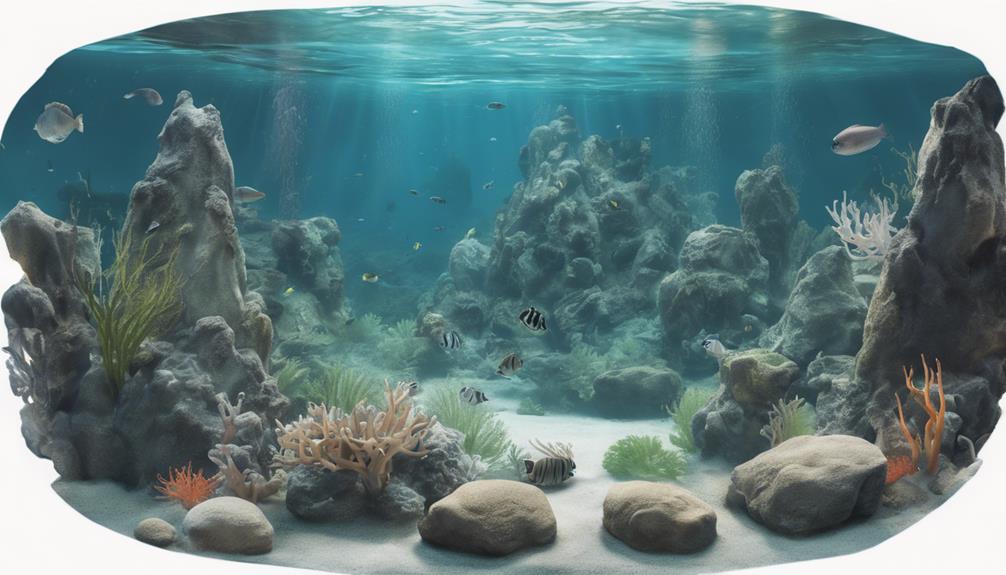
You'll want to balance those cozy hiding spots with open swimming areas, giving your cuttlefish the freedom to roam and exercise in the water column. This is important for their physical and mental well-being. Without ample space to swim, your cuttlefish may become stressed, lethargic, or even develop health issues. A well-designed open swimming area allows your cuttlefish to engage in natural behaviors like darting, hovering, and changing color.
To create an ideal open swimming area, consider the principles of aquatic landscaping. Aim to create a sense of openness by positioning decorations and plants in a way that doesn't obstruct the swim path. This will encourage your cuttlefish to explore and exercise freely. Also, incorporate varying water currents to simulate the natural ocean environment. Gentle currents can help strengthen your cuttlefish's swimming muscles, while stronger currents can provide mental stimulation.
When designing your open swimming area, prioritize your cuttlefish's safety above all. Avoid placing any decorations or plants that could cause injury or entrapment. Make sure that the water flow is gentle enough for your cuttlefish to swim against comfortably. By providing a spacious, well-designed open swimming area, you'll be giving your cuttlefish the perfect environment to thrive.
Stimulates Natural Hunting
Incorporating elements that stimulate natural hunting behavior helps maintain your cuttlefish's physical and mental agility. By creating an environment that triggers their predator instincts, you'll encourage your cuttlefish to engage in natural hunting behaviors, keeping them active and stimulated.
To create a hunting-friendly environment, consider the following elements:
- Food puzzles: Hide food in puzzle toys or complicated feeding devices that challenge your cuttlefish to figure out how to get their meal.
- Live or artificial prey: Introduce live or artificial prey, such as brine shrimp or fake fish, to mimic the natural hunting experience.
- Hiding places: Incorporate rocks, plants, or other decorations that provide hiding places for your cuttlefish to stalk their prey.
- Variable water flow: Create areas with varying water flow to simulate the natural ocean currents, making it harder for your cuttlefish to catch their food.
Enhances Overall Well-being

By replicating the natural hunting experience, you'll find that your cuttlefish's overall well-being is greatly enhanced, with a reduction in stress and boredom. This, in turn, leads to a more balanced and healthy life for your cephalopod friend. A well-planned tank layout provides the perfect environment for your cuttlefish to thrive, both physically and mentally.
Mental stimulation is key to preventing boredom and stress in cuttlefish. A tank with varied terrain, hiding places, and plenty of visual stimuli will keep your cuttlefish engaged and active. This mental stimulation helps to reduce stress and anxiety, promoting emotional balance and overall well-being. You'll notice a significant difference in your cuttlefish's behavior, as they'll be more active, curious, and responsive to their surroundings.
A well-designed tank layout also helps to promote emotional balance in your cuttlefish. By providing a sense of security and comfort, you'll help your cuttlefish feel more relaxed and at ease. This emotional balance is essential for maintaining peak health and preventing stress-related illnesses. By prioritizing your cuttlefish's emotional well-being, you'll be rewarded with a happy, healthy, and thriving pet.
Frequently Asked Questions
How Often Should I Rearrange the Tank's Layout to Keep My Cuttlefish Engaged?
You're worried that rearranging the tank too often will stress your cuttlefish, but don't be! In fact, changing the layout regularly provides essential environmental enrichment and mental stimulation for these intelligent creatures. You should aim to rearrange the tank every 2-3 weeks to keep your cuttlefish engaged and active. This will prevent boredom and stress, ensuring a safe and healthy environment for your pet.
Can I Use Artificial Plants to Create Hiding Places for My Cuttlefish?
You're wondering if artificial plants can create hiding places for your cuttlefish. Absolutely! Artificial plants can be a great addition to your tank, providing safe and cozy hiding spots for your cuttlefish. When selecting plants, opt for ones with soft, flexible leaves to prevent injury. Consider an aquascape design that incorporates plants with varying textures and heights to create a visually appealing and secure environment for your cuttlefish to thrive.
What Is the Ideal Number of Cuttlefish to Keep in a Well-Planned Tank?
You're worried that keeping multiple cuttlefish together will lead to aggression, and you're right to think so. But, surprisingly, cuttlefish can thrive in small groups. Ideally, you'll want to keep 2-3 tank mates together, as they're naturally social creatures. However, solo dwelling is also an option, as long as you provide plenty of hiding places and visual barriers. Just remember, a well-stocked tank with ample space is key to harmony among your cephalopod friends.
How Tall Should the Tank Be to Accommodate Cuttlefish Vertical Swimming?
When choosing a tank for your cuttlefish, you'll want to prioritize vertical space to accommodate their natural swimming habits. Aim for a tank that's at least 18-20 inches tall to provide ample water depth for your cuttlefish to swim freely. This will allow them to create their own swimming lanes, exercising their unique swimming style without feeling cramped. Remember, a taller tank guarantees your cuttlefish have room to thrive, reducing stress and promoting a safe environment.
Can I Add a Treasure Chest or Sunken Ship Decoration to the Tank Safely?
Oh, you want to add a treasure chest or sunken ship decoration to the tank, huh? Sounds like a blast… until your cuttlefish gets stuck in the captain's quarters. Don't get me wrong, it'll look awesome, but you're flirting with Decorative Risks. Consider the Aesthetic Considerations: will it obstruct swimming space or create hiding spots for food? Safety first, matey! Make sure your decorations won't harm your cephalopod friends.


