
You're creating a thriving environment for your cuttlefish by opting for natural filtration systems that mimic their natural habitat and promote beneficial bacteria growth. Start by selecting the right live rock, considering its type, origin, and biological properties. Add macroalgae like Chaetomorpha or Ulva to absorb excess nutrients, and incorporate sand sifting invertebrates to consume decaying organic matter. Mangroves with intricate root systems can also serve as natural filtration, absorbing excess nutrients and providing shelter for marine life. By combining these natural filtration methods, you'll create a balanced ecosystem where your cuttlefish can thrive – and the best part is, there's even more to explore.
Understanding Cuttlefish Filtration Needs

As you prepare to create a thriving environment for your cuttlefish, it's important to recognize that these intelligent creatures require a delicate balance of water parameters, making a well-designed filtration system essential to their survival. A cuttlefish's unique behavior, such as their ability to change color and texture, demands a stable and healthy environment. This can only be achieved by maintaining ideal water chemistry.
Cuttlefish are extremely sensitive to changes in water parameters, making it critical to monitor and control factors like pH, ammonia, nitrite, and nitrate levels. Even slight fluctuations can cause stress, leading to illness or even death. A well-designed filtration system will help maintain a stable environment, allowing your cuttlefish to thrive.
A natural filtration system, in particular, is ideal for cuttlefish, as it mimics their natural habitat and promotes a healthy balance of beneficial bacteria. This type of system encourages the growth of beneficial microorganisms, which break down waste products and maintain ideal water chemistry. By understanding the filtration needs of your cuttlefish, you can create a safe and thriving environment that supports their unique behavior and promotes their overall health. Remember, a well-designed filtration system is key to keeping your cuttlefish happy, healthy, and thriving.
Choosing the Right Live Rock
As you set out to create a thriving cuttlefish tank, selecting the right live rock is essential for maintaining a healthy environment. You'll need to take into account specific criteria when choosing live rock, from its origin and type to its porosity and biodiversity. By making informed decisions about rock selection, placement, and curing, you'll be well on your way to establishing a natural filtration system that will support your cuttlefish's unique needs.
Rock Selection Criteria
Selecting the right live rock for your cuttlefish tank involves considering several key factors, including the type of rock, its origin, and its biological and chemical properties. You want to make certain the rock you choose won't harm your cuttlefish or disrupt the tank's delicate balance. When it comes to rock texture, you'll want to opt for rocks with plenty of nooks and crannies, as these will provide ample surface area for beneficial bacteria to colonize. A mix of rock textures is ideal, as this will create a diverse environment that supports a wide range of marine life. Rock color is also important, as lighter-colored rocks can help to reflect light and create a sense of depth in the tank. Darker rocks, on the other hand, can create a sense of mystery and provide hiding places for your cuttlefish. By selecting rocks with the right texture and color, you'll be well on your way to creating a thriving, naturally filtered environment for your cuttlefish.
Rock Placement Strategies
Your goal when placing live rock in your cuttlefish tank is to create a natural, three-dimensional landscape that encourages water circulation, provides ample hiding places, and promotes beneficial bacteria growth. To achieve this, it's essential to develop a thoughtful rock placement strategy. Start by creating a rough outline of your aquascape design, considering the size and shape of your tank. You want to create a visually appealing rock pattern that allows for good water flow and doesn't obstruct your cuttlefish's swimming paths.
When placing the rocks, start with the largest pieces at the bottom and work your way up. This will help create a stable foundation and prevent any rocks from shifting or toppling over. As you add more rocks, focus on creating a natural, irregular shape that provides plenty of nooks and crannies for your cuttlefish to hide and explore. Avoid creating narrow tunnels or tight spaces that could trap your cuttlefish. By following these guidelines, you'll be able to create a beautiful, functional aquascape that supports the health and well-being of your cuttlefish.
Curing and Cycling
You'll need to carefully select and prepare the right live rock to guarantee a thriving environment for your cuttlefish, and that starts with curing and cycling. Curing live rock is the process of allowing it to stabilize in a separate tank before adding it to your cuttlefish's habitat. This step is vital, as it prevents bacterial blooms that can harm your cuttlefish. During the curing process, you'll notice a spike in ammonia levels, followed by a drop as beneficial bacteria colonize the rock. Cycling methods, such as the 'fishless cycle' or 'ammonia addition,' can help speed up this process. It's essential to monitor ammonia, nitrite, and nitrate levels to establish a safe and stable environment. By taking the time to properly cure and cycle your live rock, you'll create a thriving ecosystem for your cuttlefish to flourish. Remember, patience is key – rushing this process can put your cuttlefish's health at risk.
Adding Macroalgae for Filtration
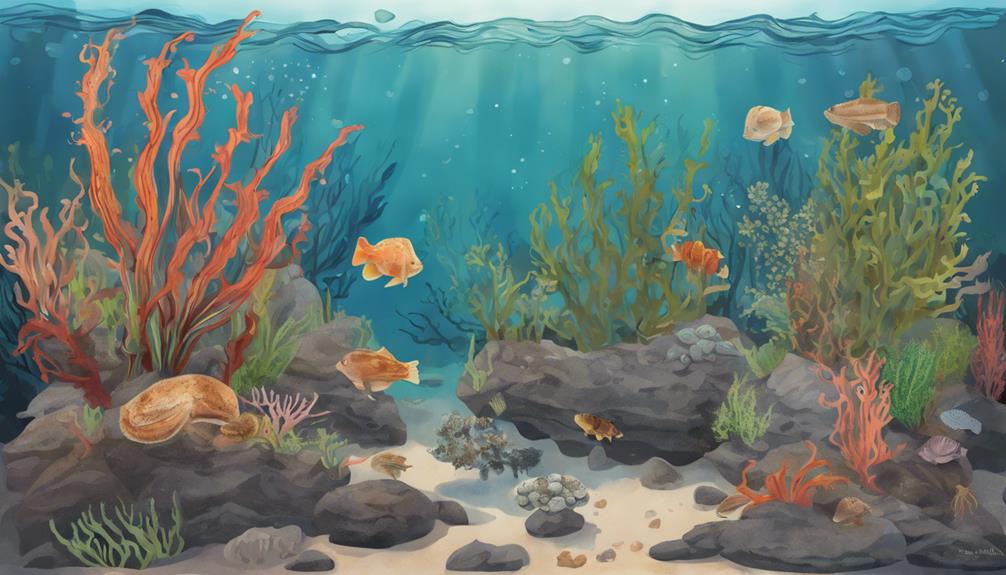
Macroalgae, like Chaetomorpha or Ulva, can serve as a natural filter in your cuttlefish tank, absorbing excess nutrients and converting them into oxygen. By adding macroalgae to your tank, you'll not only enhance water quality but also create a more natural environment for your cuttlefish. This type of algae is particularly advantageous because it's easy to care for and can thrive in a well-maintained tank.
One of the major benefits of macroalgae is its ability to absorb excess nutrients, such as nitrate and phosphate, from the water. This helps prevent algae blooms and keeps your tank water clean and clear. Additionally, macroalgae provides a natural food source for your cuttlefish, which can help supplement their diet. To promote the health and diversity of your macroalgae, it's important to provide it with ideal growing conditions, including adequate light and nutrient-rich water.
When selecting macroalgae for your tank, consider choosing a variety of species to encourage algae diversity. This will not only create a more visually appealing environment but also provide a more effective ecosystem. By incorporating macroalgae into your tank, you’ll be creating a natural filtration system that benefits both your cuttlefish and the overall health of your aquarium. Additionally, different species of macroalgae can help balance nutrient levels in the water, which is crucial for maintaining a stable environment. Implementing these various types of macroalgae can be one of the best algae control methods, as they outcompete nuisance algae for resources and light. This proactive approach not only supports your cuttlefish but also fosters a thriving aquatic community that can withstand fluctuations in water quality.
Incorporating Sand Sifting Invertebrates
By introducing sand sifting invertebrates, such as conchs or sand dollars, to your cuttlefish tank, you're adding another layer of important filtration to the ecosystem. These sand dwellers play a vital role in maintaining a healthy environment by consuming decaying organic matter and recycling nutrients. As you introduce these invertebrates, you'll notice an increase in invertebrate diversity, which is vital for a thriving aquarium.
When selecting sand sifting invertebrates, make sure to research their specific needs and compatibility with your cuttlefish. Conchs, for example, are gentle and can be a great addition to a community tank, while sand dollars are more sensitive and require a species-only tank. Remember to provide a suitable environment, including a deep enough sand bed and adequate hiding places, to guarantee the well-being of your new additions.
As these invertebrates go about their business, they'll help to break down waste and prevent the buildup of toxins. This natural filtration process not only keeps your water clean but also reduces the risk of disease and stress in your cuttlefish. By incorporating sand sifting invertebrates into your tank, you're taking a significant step towards creating a balanced and sustainable ecosystem. With proper care and attention, these tiny workers will help maintain a healthy and thriving environment for your cuttlefish to flourish.
Using Mangroves for Filtration

Mangroves, with their intricate root systems, can be utilized as a natural filtration method in your cuttlefish tank, providing a unique opportunity to replicate the complex ecosystem found in their natural habitats. By incorporating mangroves into your tank, you'll create a thriving environment that mimics the coastal ecosystems where cuttlefish are found.
When selecting mangrove species, look for those that are tolerant of aquarium conditions and can thrive in a saltwater environment. Some popular species for aquarium use include Rhizophora mangle and Avicennia germinans. These species are well-suited for filtration and can help to remove excess nutrients and waste products from the water.
In addition to their filtration benefits, mangroves also provide a habitat for beneficial organisms, such as juvenile fish and invertebrates, which can serve as a natural food source for your cuttlefish. In fact, mangroves are often referred to as 'saltwater nurseries' due to their importance as a habitat for young marine life.
When incorporating mangroves into your tank, be sure to provide adequate lighting, temperature control, and water circulation to guarantee the health and well-being of both the mangroves and your cuttlefish. With proper care and maintenance, mangroves can be a valuable addition to your natural filtration system, providing a safe and healthy environment for your cuttlefish to thrive.
Creating a Balanced Biological Cycle
As you've successfully incorporated mangroves into your cuttlefish tank, it's now time to focus on creating a balanced biological cycle that will further enhance the overall health and stability of your aquarium. Achieving biological harmony in your tank is essential for the well-being of your cuttlefish. A balanced biological cycle guarantees that waste products are efficiently broken down, and nutrients are readily available for your cuttlefish to thrive.
To achieve a balanced biological cycle, keep the following key factors in mind:
- Monitor and maintain ideal water parameters, such as pH, ammonia, and nitrite levels, to ensure a stable environment for beneficial bacteria to thrive.
- Introduce beneficial bacteria supplements or live rock to stimulate the growth of beneficial microorganisms.
- Provide adequate biological filtration, such as bio-balls or ceramic rings, to support the colonization of beneficial bacteria.
- Perform regular water changes to maintain a healthy balance of nutrients and prevent the buildup of toxins.
- Avoid overfeeding, as excess nutrients can disrupt the biological balance and lead to water quality issues.
Maintaining Optimal Water Quality

As you set up your cuttlefish tank, you'll need to prioritize maintaining ideal water quality to keep your cephalopods thriving. You'll want to regularly check the water's chemical and biological parameters to make sure they're within a safe range for your cuttlefish. By monitoring water quality and performing regular water changes, you'll be able to identify and address any issues before they become serious problems.
Water Quality Monitoring
You need to monitor water quality parameters regularly to make sure your cuttlefish thrive in a healthy environment. Regular water quality monitoring helps you catch any potential issues before they harm your cuttlefish. It's essential to keep a close eye on water parameters to guarantee your tank remains a safe haven for your cuttlefish.
Here are some essential water quality parameters to monitor:
- pH levels: Keep an eye out for pH fluctuations, which can be detrimental to your cuttlefish.
- Ammonia levels: Regular ammonia testing is necessary to ensure your biological filter is functioning correctly.
- Nitrite and nitrate levels: These can indicate the presence of toxic compounds in the water.
- Water hardness: Monitor the general hardness (GH) and carbonate hardness (KH) to make sure they're within the suitable range for your cuttlefish.
- Oxygen levels: Ensure your cuttlefish have enough oxygen to breathe comfortably.
Regular Water Changes
Regular water changes are essential to maintaining ideal water quality, since they help remove built-up toxins and replenish essential minerals and elements. As you work towards creating a healthy environment for your cuttlefish, regular water changes become an important aspect of your tank's maintenance routine. By doing so, you'll prevent the accumulation of harmful substances that can threaten your pet's well-being.
To determine the ideal change frequency, you'll need to perform regular water testing. This will help you identify any fluctuations in water parameters, allowing you to adjust your water change schedule accordingly. As a general rule, it's recommended to change 10-15% of your tank's water weekly. However, this frequency may vary depending on your tank's specific needs and water testing results. Remember, it's always better to err on the side of caution when it comes to your cuttlefish's health. By staying vigilant and proactive, you'll ensure a safe and thriving environment for your pet.
Frequently Asked Questions
What Is the Ideal Water Flow Rate for a Cuttlefish Tank?
As you immerse yourself into the world of cuttlefish care, you're wise to wonder about the ideal water flow rate for your tank. Imagine a gentle ocean current caressing your cuttlefish's skin. For a thriving environment, aim for a moderate water circulation of 10-15 gallons per hour. This flow rate will create soothing flow patterns, mimicking the natural ocean currents, ensuring your cuttlefish stay safe and healthy.
Can I Use Artificial Decorations Instead of Live Rock?
You're wondering if you can opt for artificial decorations instead of live rock in your cuttlefish tank. While it's tempting to create fake landscapes, it's crucial to prioritize your cuttlefish's safety. Artificial decorations can be a good option, but be cautious when choosing decoration options. Make sure they're safe, stable, and won't cause any harm or entanglement risks to your curious cuttlefish.
How Often Should I Clean the Macroalgae in My Tank?
"Ah, you think you're a rebel, neglecting your macroalgae cleaning duties, don't you? Newsflash: algae growth is like a teenager's mood swings – unpredictable and potentially disastrous. For your tank's sake, don't be lazy! Clean that macroalgae every 2-3 weeks to prevent overgrowth and maintain healthy tank maintenance. Your cuttlefish (and your reputation as a responsible aquarist) will thank you."
Are Sand Sifting Invertebrates Compatible With Cuttlefish?
You're wondering if sand-sifting invertebrates are compatible with cuttlefish. Generally, they can coexist peacefully, but it's important to choose tankmates wisely. Consider the invertebrate's behavior: some species, like conchs, are gentle and won't bother your cuttlefish, while others might compete for food or habitat. Research each species' needs and temperaments to guarantee a harmonious tank environment. Remember, safety first – avoid mixing species that might stress or harm each other.
Can I Keep Multiple Cuttlefish Together in the Same Tank?
You've wondered if keeping multiple cuttlefish together is possible. The theory is that cuttlefish can bond, but is it safe? In the wild, they do coexist, but with a strict social hierarchy. In captivity, it's important to replicate this hierarchy to avoid aggression. If you're willing to provide a large, species-only tank with plenty of hiding places, you might succeed. However, it's essential to monitor their behavior closely to guarantee their safety.


