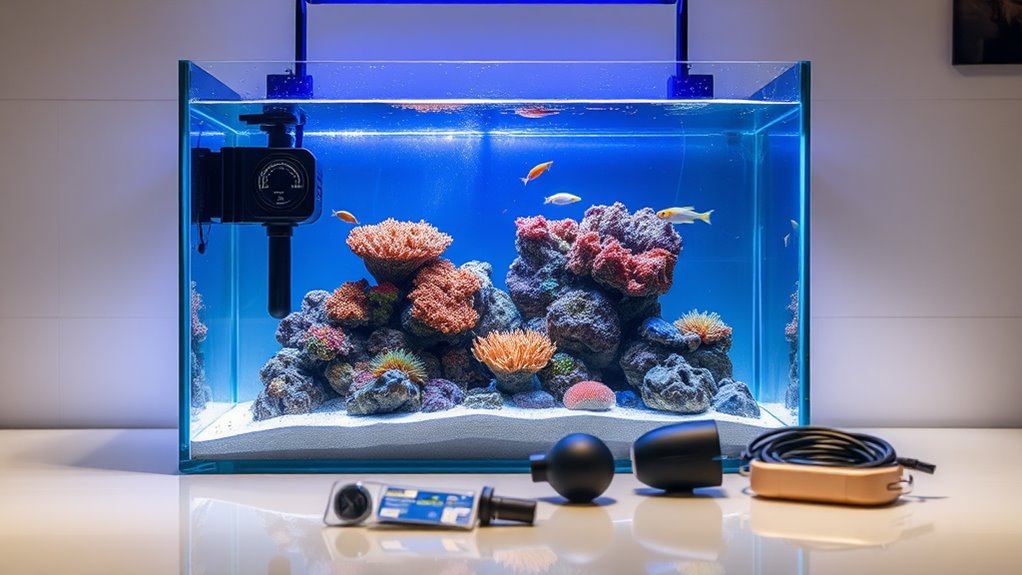
You'll need a spacious aquarium with precise water conditions and a well-planned environment to succeed in keeping cuttlefish. Start with a tank that's at least 50 gallons, and opt for a longer, wider, rectangular shape for stability. Choose peaceful, small species as tankmates, and avoid aggressive or fin-nipping fish. Cycle your aquarium to establish beneficial bacteria, and maintain ideal water conditions by testing pH, ammonia, and nitrate levels regularly. With a balanced diet and a visually stimulating environment, you'll be off to a great start. As you set up your cuttlefish aquarium, there's more to discover about creating the perfect habitat.
Choosing the Right Aquarium Size

When deciding on an aquarium size for your cuttlefish, consider that a minimum tank capacity of 50 gallons is recommended, as these intelligent creatures require ample space to swim and thrive. You'll want to provide a spacious environment that allows your cuttlefish to roam freely, promoting their overall health and well-being.
In addition to tank capacity, the aquarium shape is also important. A longer, wider tank is preferred over a tall, narrow one, as it allows for more swimming space and reduces water circulation issues. A rectangular tank is an excellent choice, as it provides a stable and calming environment for your cuttlefish.
Tank orientation is another essential consideration. You'll want to make sure the tank is positioned in a way that minimizes water movement and promotes stability. A well-oriented tank will reduce stress on your cuttlefish, allowing them to feel secure and relaxed. Aim to position the tank in a quiet area, away from direct sunlight and foot traffic, to create a peaceful environment.
Selecting Suitable Tankmates for Cuttlefish
As you prepare to introduce tankmates to your cuttlefish, you'll want to choose species that won't harass or compete with your cephalopod. You'll need to identify safe and compatible species that can thrive in the same environment as your cuttlefish. By doing so, you'll create a harmonious and low-maintenance aquarium that benefits all its inhabitants.
Safe Tankmate Options
You'll want to choose tankmates that won't harass or compete with your cuttlefish for food, so it's crucial to select species that are peaceful, small, and have similar water requirements. This guarantees a harmonious environment where your cuttlefish can thrive. When it comes to Cuttlefish Companions, you'll want to focus on Calm Neighbors that won't stress or intimidate your cephalopod. Avoid aggressive or fin-nipping species that might see your cuttlefish as a snack or a threat.
Instead, look for species that are naturally gentle and non-competitive. These tankmates will help create a relaxed atmosphere, allowing your cuttlefish to focus on hunting and socializing. Remember, safety should always be your top priority when selecting tankmates. By choosing peaceful, small, and compatible species, you'll create a safe haven for your cuttlefish to flourish. With careful selection, you can create a thriving, low-maintenance aquarium that's perfect for your cuttlefish and its tankmates.
Compatible Species Lists
Frequently, cuttlefish enthusiasts turn to species like the royal gramma, neon gobies, and firefish to create a harmonious community in their aquariums. When selecting tankmates, it's important to research species that thrive in similar water conditions and have compatible temperaments. You'll want to avoid mixing species that may see your cuttlefish as prey or competitors.
| Species | Compatibility |
|---|---|
| Royal Gramma | Excellent, peaceful, and small |
| Neon Gobies | Good, active swimmers, but may nip |
| Firefish | Good, but may compete for food |
Aggressive Fish Avoidance
When selecting tankmates for your cuttlefish, it's essential to steer clear of aggressive fish that may harass or attack them. You want to create a peaceful environment where your cuttlefish can thrive, not live in fear of being bullied. Aggressive fish can disrupt the tank hierarchy, causing stress and anxiety for your cuttlefish.
You should avoid fish with a strong predatory instinct, like triggerfish or angelfish, as they may view your cuttlefish as prey. Fish with a dominant personality, such as damselfish or wrasses, can also cause problems. These fish often establish themselves at the top of the tank hierarchy, leaving your cuttlefish to fight for resources and attention.
Instead, opt for peaceful, community-oriented fish that won't compete with your cuttlefish for food or space. Fish like gobies, blennies, or small species of sharks can make great tankmates. By choosing tankmates carefully, you can create a harmonious environment where your cuttlefish can flourish. Remember, it's always better to err on the side of caution when introducing new fish to your tank. Observe their behavior and be prepared to separate them if you notice any signs of aggression.
Cycling Your Cuttlefish Aquarium

Now that you've set up your cuttlefish aquarium, it's essential to cycle it to establish a healthy environment for your cephalopod friends. You'll need to introduce beneficial bacteria to break down waste, and there are a few methods to do so. You'll explore the different bacterial colonization methods and learn how to establish a stable nitrogen cycle, ensuring your aquarium is safe for your cuttlefish.
Bacterial Colonization Methods
You'll need to introduce beneficial bacteria into your cuttlefish aquarium to break down waste products, and there are a few methods to do so. One popular approach is to use a fishless cycle, where you add ammonia to the tank to feed the bacteria. This method allows for biofilm formation on the tank's surfaces, promoting microbe diversity. Another option is to transfer bacteria from an established tank by adding a portion of the gravel or filter media to your new tank. This method can be risky, as it may introduce unwanted organisms, so be cautious when using this approach. A third method involves using commercial bacterial supplements, which can be added directly to the tank. Whichever method you choose, it's essential to monitor the tank's water parameters to establish a safe environment for your cuttlefish. Remember to be patient, as bacterial colonization can take several weeks. By introducing beneficial bacteria, you'll create a thriving ecosystem that will promote the health of your cuttlefish.
Establishing Nitrogen Cycle
Cycling your cuttlefish aquarium involves allowing the beneficial bacteria to establish a balanced nitrogen cycle, which is vital for maintaining a healthy environment for your cephalopod. This process can be achieved through a fishless cycle, which eliminates the risk of harming your cuttlefish during the cycling process. To start, you'll need an ammonia source, such as fish food or ammonia supplements, to feed the beneficial bacteria. Monitor the ammonia levels and wait for the nitrite conversion to occur, which can take several weeks. During this time, regularly test the water for ammonia and nitrite levels to make sure the cycle is progressing. You can speed up the cycle by maintaining a consistent water temperature, pH, and water circulation. However, be patient, as rushing the cycle can lead to an unstable environment. Remember, a healthy nitrogen cycle is essential for your cuttlefish's well-being, so take the time to get it right. With a little patience, you'll be rewarded with a thriving, low-maintenance aquarium.
Maintaining Optimal Water Conditions
To thrive, your cuttlefish require a vital, guarantee, ideal environment with precise water chemistry, which you can achieve by regularly testing and adjusting the water's pH, ammonia, nitrite, and nitrate levels. You'll want to secure pH stability, as sudden changes can be stressful for your cuttlefish. Aim for a pH range of 7.9-8.4, and make adjustments gradually to avoid shocking your tank's ecosystem.
Water hardness is another essential factor to ponder. Cuttlefish prefer soft to moderately hard water, with a general hardness (GH) of 5-15 dGH and a carbonate hardness (KH) of 4-10 dKH. Regular water changes will help maintain the best water hardness and prevent mineral buildup.
Regular water testing will help you identify any issues before they become significant problems. You should test for ammonia, nitrite, and nitrate levels at least once a week. Ammonia and nitrite levels should always be zero, while nitrate levels should be kept below 5 ppm. Regular water changes and a well-established biofilter will help maintain a healthy balance.
Providing a Balanced Diet for Cuttlefish
Cuttlefish are carnivores that require a diet rich in protein and varied in composition to guarantee excellent health and coloration, so it's important that you provide them with a balanced and nutritious diet. A well-planned diet will not only ensure your cuttlefish thrive but also prevent common health issues.
You should aim to provide your cuttlefish with a diverse diet that includes live foods, such as brine shrimp, mysis shrimp, and small fish. These live foods are rich in protein and will help to stimulate your cuttlefish's natural hunting behavior. In addition to live foods, you can also offer frozen or thawed meaty foods like squid, shrimp, and fish flesh.
To make sure your cuttlefish receive all the necessary nutrients, consider adding nutrient supplementation to their diet. This can include vitamins and minerals specifically formulated for cephalopods. It's important to research and select a reputable brand to make certain the supplements are safe and effective.
Remember to vary your cuttlefish's diet regularly to prevent boredom and ensure they receive a broad range of nutrients. You can achieve this by rotating different types of live foods, frozen foods, and supplements. By providing a balanced and diverse diet, you'll be rewarded with healthy, vibrant cuttlefish that will thrive in their aquarium home.
Decorating the Aquarium for Cuttlefish
You'll need to create a visually stimulating environment that mimics the cuttlefish's natural habitat, with a mix of open swimming spaces and complex hiding places. This will help reduce stress and provide your cuttlefish with a sense of security. To achieve this, you'll want to incorporate a variety of decorations that replicate the rocky landscapes and artificial reefs found in their natural environment.
Here are some essential decorations to include:
- Rocks and boulders: These will provide hiding places and create a sense of depth in the aquarium.
- Artificial reefs: These can be purchased or DIY-ed using safe materials like ceramic or plastic. They'll provide additional hiding spots and visual interest.
- Caves and overhangs: These will give your cuttlefish a sense of security and provide additional hiding places.
- Live rock or coral: These will help to create a natural-looking environment and provide additional hiding spots.
Remember to arrange the decorations in a way that creates a sense of flow and visual interest. Avoid overcrowding the aquarium, as this can cause stress and make maintenance more difficult. By creating a visually stimulating environment, you’ll be able to provide your cuttlefish with a happy and healthy home. Additionally, consider incorporating various textures and colors to enhance the aesthetic appeal of the habitat. When choosing lighting for cuttlefish tanks, it’s essential to mimic their natural environment, as appropriate lighting can influence their behavior and overall well-being. Optional hiding spots and open areas can also help create a balanced atmosphere, allowing your cuttlefish to thrive and feel secure.
Frequently Asked Questions
Can I Keep Cuttlefish in a Bioluminescent Aquarium?
You're wondering if you can keep cuttlefish in a bioluminescent aquarium? It's an intriguing idea, but be cautious. While bioluminescent wonders can create a mesmerizing display, they can also be stressful for cuttlefish. Imagine being surrounded by an eternal twilight, where dark magic lurks in every corner. It's important to prioritize your cuttlefish's well-being over aesthetics. Make sure you provide a safe, comfortable environment, and consider the potential risks before diving into this unconventional setup.
Will My Cuttlefish Recognize and Interact With Me?
As you gaze into the depths of your tank, wondering if your cuttlefish will recognize you, the answer is a resounding yes. Cuttlefish intelligence is renowned for its complexity, and they're known to form personal bonds with their caregivers. With consistent interaction and a gentle hand, you'll find your cuttlefish will soon greet you with a curious gaze, even changing color to communicate. Over time, you'll develop a remarkable connection, built on trust and mutual respect.
How Do I Handle and Transport Cuttlefish Safely?
When handling cuttlefish, you'll want to prioritize their safety and well-being. To transport them safely, use a soft-mesh cuttlefish net to gently scoop them up. Avoid using bare hands, as their suckers can stick to skin. Instead, practice gentle grasping by supporting their body and letting them settle into your palm. Move slowly and calmly to reduce stress. Always handle them briefly and humanely, minimizing their time out of water.
Are There Any Specific Electrical Requirements for Cuttlefish Aquariums?
When setting up an aquarium for your cuttlefish, you'll need to take into account specific electrical requirements. Take the example of the National Aquarium of New Zealand, which uses a custom-built system to maintain a stable environment. To guarantee safety, you'll want to prioritize power consumption, voltage control, and circuit protection. For instance, a voltage stabilizer can prevent power surges that might harm your cuttlefish.
Can I Breed Cuttlefish in a Home Aquarium Setting?
You're wondering if you can breed cuttlefish in a home aquarium setting. Breeding cuttlefish requires expertise and specialized care. Cuttlefish mating is a complex process, and tank cycling is vital to guarantee a healthy environment. Unfortunately, it's not recommended to attempt breeding cuttlefish at home, as it can be stressful for the animals and lead to health issues. Leave breeding to experienced professionals to guarantee the safety and well-being of these amazing creatures.